US Reverses Hormuz Toll Plan, Imposes Port Blockade and Conducts Airstrikes
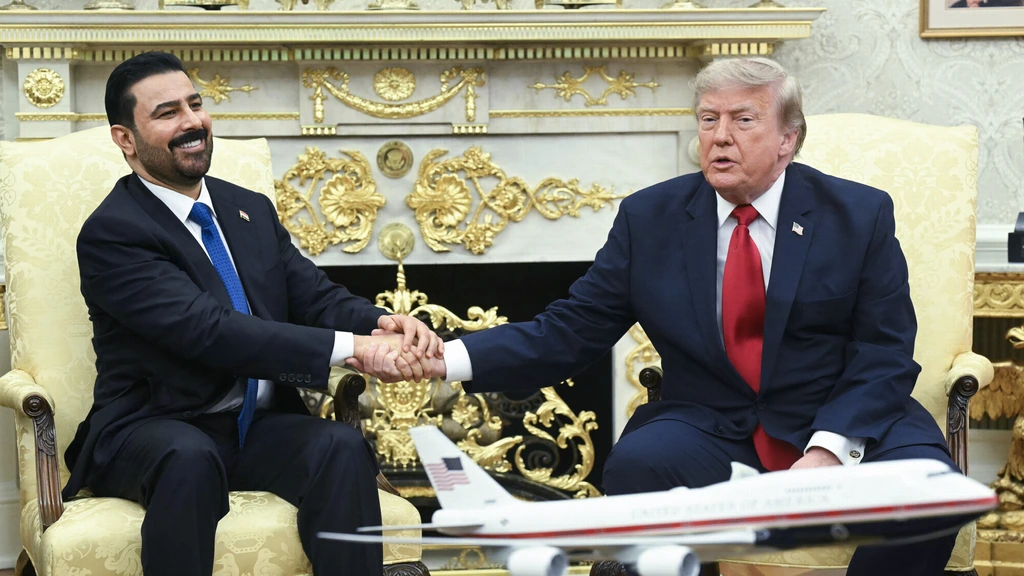
President Trump announced that the United States will not implement tolls on ships passing through the Strait of Hormuz, reversing an earlier statement. Instead, he revealed a series of trade agreements with countries bordering the Persian Gulf. Trump stated his dislike for the concept of tolls, citing "very productive" conversations with Middle Eastern leaders as the reason for his change of heart. The toll plan was set to begin that evening, coinciding with the resumption of a U.S. blockade on Iranian ports. This blockade, according to Trump, applies to vessels traveling to or from Iranian ports or carrying any Iranian cargo.
In parallel, airstrikes were reported targeting Iran and regional countries hosting U.S. military bases. Iranian state media claimed the U.S. conducted bombings in multiple locations within Iran, a claim confirmed by an anonymous U.S. military official to Reuters. Air raid sirens were heard in Kuwait and Bahrain, with reports of an unspecified number of projectiles being intercepted. The Iranian military asserted it had struck U.S. Army depots in these nations.
Furthermore, the Iranian military reportedly attacked two tankers in the Strait of Hormuz overnight, resulting in the death of one Indian crew member, as reported by the United Arab Emirates. Authorities in Oman confirmed the evacuation of crews from these two vessels. This incident follows previous attacks by Iran on commercial ships in the Strait of Hormuz earlier in the week. Iran's Revolutionary Guard insists that all ships using the strait must coordinate with Iran, a claim disputed by the U.S., which has responded with significant strikes against Iran in recent days.
The shifting U.S. policy regarding the Strait of Hormuz, moving from toll imposition to a port blockade and airstrikes, reflects a complex geopolitical strategy. The reversal on tolls suggests a potential recalibration of economic pressure tactics, possibly to avoid alienating regional partners or to focus on more direct punitive measures. The renewed blockade and airstrikes indicate a continued commitment to asserting control and deterring Iranian actions, while also potentially escalating regional tensions. This dynamic highlights the inherent challenge of balancing economic statecraft with military deterrence in a strategically vital waterway. The interplay between U.S. actions, Iranian responses, and the involvement of regional actors creates a volatile environment where miscalculation could have significant global economic and security ramifications. The long-term implications for international shipping and energy markets will depend on the sustained application and effectiveness of these evolving U.S. policies.
AI-generated to prompt reflection — not editorial opinion, not advice, not a statement of fact. How this works.