US-Saudi Nuclear Deal Conditional on Israel Recognition, Trump Says
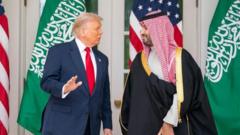
The ink was barely dry on the US-Saudi nuclear cooperation agreement when President Donald Trump announced a condition for its implementation. In a post on his social media platform, Truth Social, Trump stated that the deal's execution is contingent upon Saudi Arabia joining the Abraham Accords and recognizing Israel. He clarified that, contrary to initial reports from American media outlets, the agreement would not include uranium enrichment capabilities for Saudi Arabia. This statement introduces a significant political hurdle to the nuclear pact, linking energy cooperation to broader regional normalization efforts. The original agreement, focused on civilian nuclear technology, now faces a new layer of complexity due to this presidential stipulation. The implications of this condition are far-reaching, potentially impacting both the future of US-Saudi relations and the ongoing dynamics of Middle Eastern diplomacy.
The US-Saudi nuclear cooperation agreement's path to implementation has been significantly altered by President Trump's public stipulation. This move appears to leverage the nuclear deal as a tool to advance broader US foreign policy objectives in the Middle East, specifically the normalization of relations between Saudi Arabia and Israel. The conditionality highlights a strategic approach where bilateral agreements are used to incentivize geopolitical shifts. This raises questions about the long-term stability of such conditional pacts, as they become subject to the evolving political priorities of individual leaders and administrations. The integration of nuclear technology and regional diplomacy underscores the complex interplay of national security, economic interests, and international relations in the 21st century, particularly in a region with enduring geopolitical sensitivities.
AI-generated to prompt reflection — not editorial opinion, not advice, not a statement of fact. How this works.