US Soccer Team Uses Brain Scans to Improve Penalty Kicks for 2026 World Cup
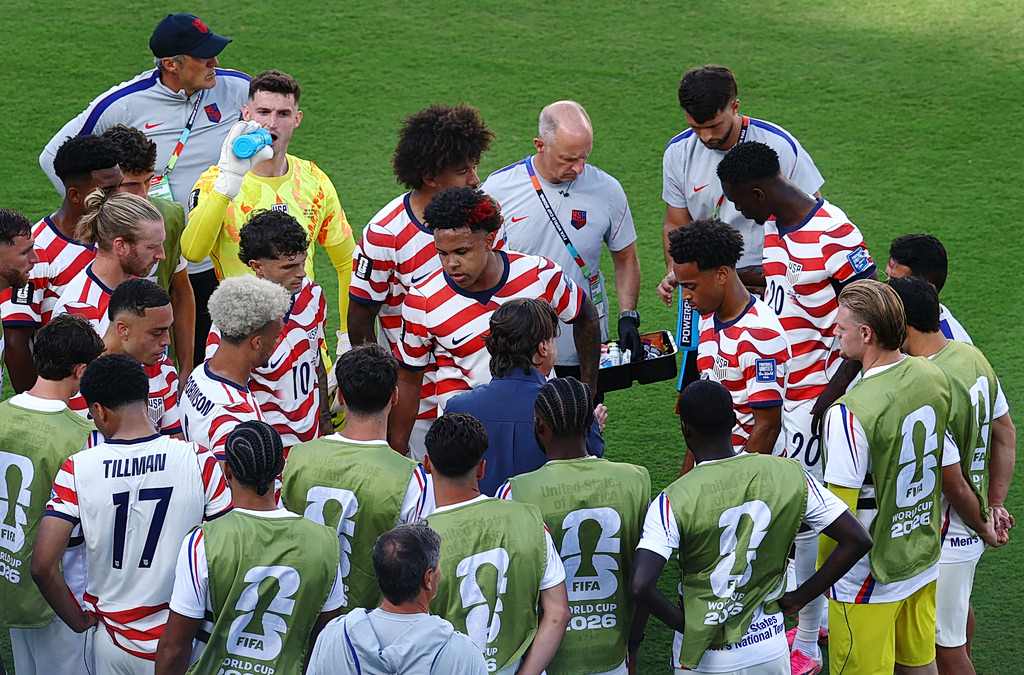
The United States men's national soccer team is employing advanced technology to reduce the chances of failure during penalty shootouts, a situation often described as a "penalty shootout nightmare." Starting in January 2025, the team began monitoring the brain activity of players as they take penalty kicks. This innovative approach utilizes a high-tech, German-manufactured device designed to track neural activity at the precise moment of execution. The goal is to gain a deeper understanding of players' cognitive states during these high-pressure situations and to develop strategies that can enhance performance and consistency. By analyzing brain patterns, the coaching staff aims to identify factors that may lead to missed shots and to train players to better manage the psychological stress associated with penalty kicks. This initiative reflects a growing trend in professional sports to integrate cutting-edge scientific and technological tools into training regimens to gain a competitive edge.
The US Soccer team's adoption of brain activity monitoring for penalty kicks represents a significant convergence of neuroscience and athletic performance. This strategy aims to demystify the psychological pressures of penalty shootouts by providing objective data on cognitive responses. By analyzing neural patterns, the team seeks to optimize player training and decision-making under duress, potentially mitigating the "Russian roulette" aspect of these critical moments. This approach, while innovative, raises questions about data privacy, the interpretation of complex brain signals, and the extent to which such interventions can truly overcome deeply ingrained performance anxieties. The long-term impact will depend on the reliability of the technology and its integration into holistic player development, ensuring that technology serves to augment, rather than replace, fundamental skill and mental resilience.
AI-generated to prompt reflection — not editorial opinion, not advice, not a statement of fact. How this works.