US Special Envoy Visits Rohingya Camps in Cox's Bazar, Seeks Return Cooperation
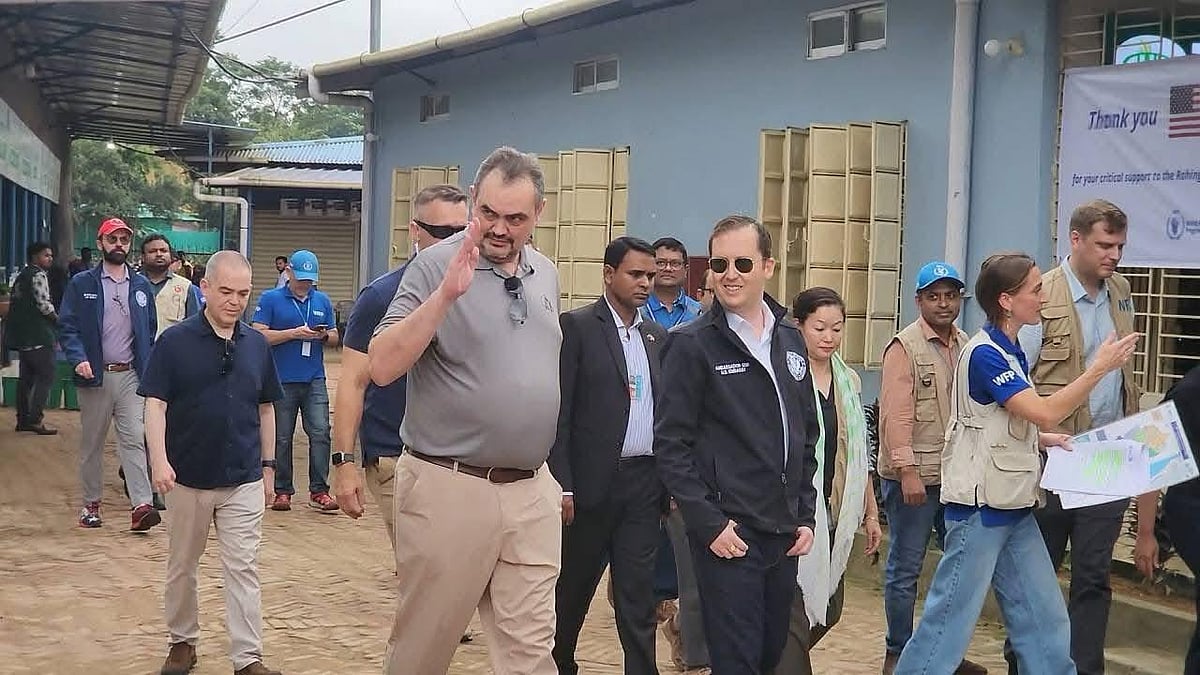
U.S. Special Representative for South and Central Asia, Sergio Goray, visited Rohingya refugee camps in Ukhia, Cox's Bazar, on Friday. He spent nearly three hours, from 1:45 PM to 4:45 PM, observing various humanitarian and service activities within the camps and speaking with residents to understand their current situation. A U.S. Embassy delegation, led by U.S. Ambassador to Bangladesh, Brent Christensen, accompanied Goray during the visit. The delegation aimed to witness firsthand the U.S.-funded initiatives operating in the camps, touring service centers and observing the overall camp conditions from a viewpoint tower. Rohingya refugees expressed their desire for safe, voluntary, sustainable, and dignified repatriation to Myanmar's Rakhine State, requesting U.S. assistance in achieving this goal. During a meeting with local officials, the delegation inquired about ongoing Rohingya arrivals, returns to Rakhine State, conditions there, and relations between refugees and the local population. Officials reported that an average of 7 to 10 new arrivals per day are still entering Bangladesh from Rakhine State due to conflict, persecution, or medical needs. The prolonged halt in repatriation and some refugees' involvement in criminal activities have increased local dissatisfaction. Currently, over 1.4 million registered Rohingya reside in 33 camps across Ukhia and Teknaf, with nearly 800,000 arriving after August 2017. Despite efforts, no Rohingya have been repatriated to Myanmar in the last nine years, and approximately 152,000 have arrived from Rakhine State in the past 18 months. The delegation also inspected health services, food distribution, data registration, and LPG distribution in camps 4, 6, and 8 (West), engaging with healthcare providers and observing registration and food voucher programs.
The visit by the U.S. Special Representative to the Rohingya camps underscores the ongoing international engagement with the protracted refugee crisis. While the U.S. is a significant humanitarian aid donor, its delegation's focus on observing U.S.-funded activities and inquiring about repatriation dynamics highlights the complex interplay between aid provision and geopolitical objectives. The refugees' reiterated demand for safe and dignified return, juxtaposed with the reality of continued arrivals and local tensions, points to systemic challenges in achieving durable solutions. Future policy considerations should address the root causes of displacement in Rakhine State and explore mechanisms for voluntary repatriation that are demonstrably safe and sustainable, rather than solely relying on humanitarian assistance or bilateral discussions that have yielded limited results over the past decade. The situation also presents a case study in the long-term governance and resource allocation challenges associated with hosting large refugee populations, particularly when repatriation remains elusive.
AI-generated to prompt reflection — not editorial opinion, not advice, not a statement of fact. How this works.