US Startup Claims AI Model is 56x Faster Than Most LLMs
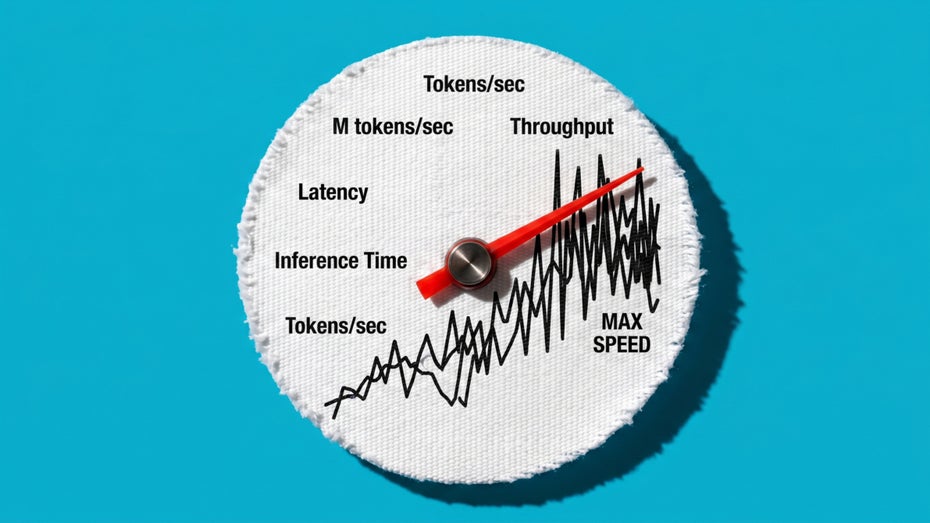
A US startup named Subquadratic is making a significant claim about its new large language model (LLM). The company asserts that its model can process information much faster than most existing LLMs. Specifically, Subquadratic states its model is up to 56 times quicker than many current LLMs. This advancement aims to address the common challenges associated with large language models, which are often expensive, slow, and consume substantial energy, especially as the context window increases. Subquadratic claims to have solved these issues simultaneously with its innovative approach. The company's technology seeks to overcome the inherent limitations of traditional LLMs, offering a more efficient and sustainable solution for AI development and deployment. This development could have significant implications for the field of artificial intelligence, potentially enabling faster and more cost-effective AI applications.
The development of large language models (LLMs) has been marked by a trade-off between performance and computational resources. Claims of significant speed improvements, such as Subquadratic's assertion of being 56 times faster, highlight the ongoing industry pursuit of efficiency. Such advancements could democratize access to powerful AI tools by reducing the prohibitive costs and energy demands associated with training and running complex models. However, the long-term viability and scalability of these new architectures will depend on rigorous independent validation and their ability to maintain performance across diverse real-world applications. The focus on overcoming the quadratic scaling of context length is a critical area, as it directly impacts the practical utility of LLMs for complex tasks requiring extensive information processing. Future developments will likely center on balancing speed, accuracy, and resource efficiency to unlock the full potential of AI.
AI-generated to prompt reflection — not editorial opinion, not advice, not a statement of fact. How this works.