US State Department Map of Africa Erroneously Labeled All Countries at Global Conference
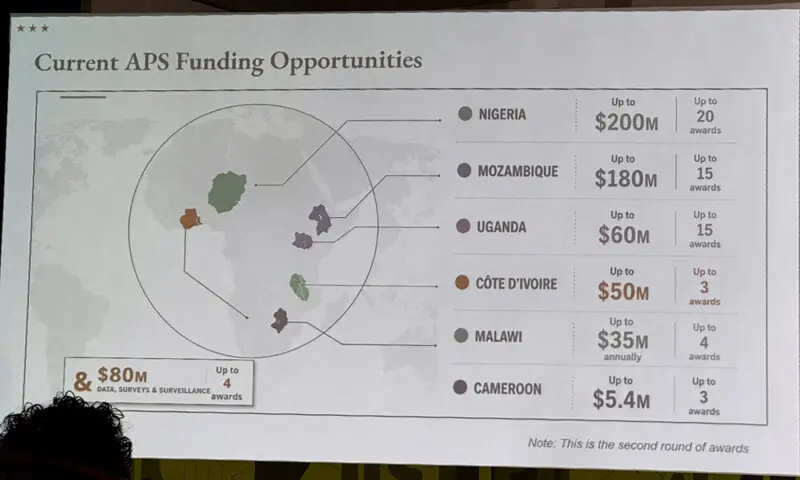
A United States State Department map of Africa mistakenly mislabeled every country during a presentation at the global AIDS 2026 conference in Rio de Janeiro this week. The inaccurate map, which was displayed during a segment on new health agreements, caused significant surprise among attendees, leading some to capture screenshots and share them online. Video evidence reviewed by this news agency confirmed the map's presence in the presentation. An analysis of the image revealed an artificial intelligence watermark, suggesting it was generated using OpenAI tools, though OpenAI did not comment when reached for a statement. The State Department accepted full responsibility for the error, attributing it to a team member who quickly altered the slide deck before the event. Notable geographical errors included depicting Nigeria as landlocked in the Sahara Desert, placing Mozambique in the Horn of Africa instead of its actual southeastern location, and misplacing Ivory Coast on the opposite side of the continent. Screenshots of the erroneous map initially surfaced on a Substack post by AIDS expert Emily Bass and gained considerable traction on LinkedIn, with one post reaching approximately 40,000 views. Matt Petit, an AI specialist at the Atlantic Council, commented on the issue, noting that the creator and approver of the slide demonstrated a lack of geographical knowledge and due diligence.
AI-generated content, while offering potential efficiencies, carries inherent risks related to accuracy and verification. The State Department's reliance on an AI-generated map, which subsequently contained significant geographical inaccuracies, highlights the critical need for robust human oversight and fact-checking processes, especially when dealing with sensitive geopolitical information. This incident underscores a broader challenge in the digital age: ensuring the integrity of information disseminated by official bodies. Moving forward, organizations must develop clear protocols for the use and validation of AI-generated materials to maintain public trust and prevent reputational damage. The rapid dissemination of the error online also points to the increased scrutiny faced by public institutions in the digital sphere, where mistakes can be amplified globally within minutes.
AI-generated to prompt reflection — not editorial opinion, not advice, not a statement of fact. How this works.