US Strikes Civilian Infrastructure in Southern Iran Amid Escalating Tensions
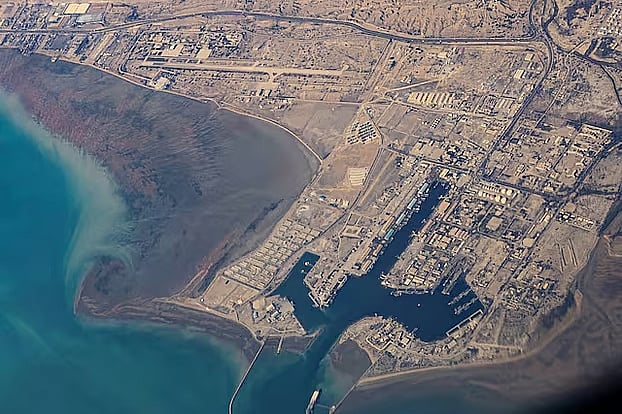
The United States has intensified its military operations against Iran, with Tehran accusing Washington of targeting civilian infrastructure during the sixth consecutive night of attacks. Iranian officials report that a railway station and residential areas have been struck, alongside other civilian facilities including bridges, water infrastructure, and food warehouses. These strikes follow President Donald Trump's remarks about preserving energy facilities for last, as he told Fox News he would "save the energy facilities for last." Amidst rising tensions, Iran's military claimed on Friday to have targeted a U.S. aircraft near a military base in Bahrain, while Kuwait reported responding to missile and drone attacks. Consequently, air defense systems across Bahrain, Kuwait, Oman, Qatar, the UAE, and Jordan have been reactivated this week. The current conflict began on February 28th with Israeli and U.S. aggression in Iran. Although Washington and Tehran had recently signed a memorandum of understanding to extend a ceasefire and create a framework for peace talks, renewed fighting erupted just a month later, with both nations accusing each other of violating the agreement. The recent attacks occur amidst escalating tensions over the Strait of Hormuz, after Iran threatened to block naval traffic in the strategic waterway following Oman's announcement of a new maritime corridor. In response, the U.S. has reimposed a naval blockade on all vessels transiting Iran's ports and coastal areas. The strikes on civilian infrastructure raise questions about Washington's true objectives: is it to cripple Iran's military capabilities and force negotiations, clear vital transport networks for a potential ground invasion, or exert economic and political pressure by destroying essential daily life infrastructure? These actions have ignited debate over their compliance with international law and the risk of escalating into a full-scale war.
The U.S. military's shift towards targeting civilian infrastructure in Iran, including railway stations, residential areas, bridges, and water facilities, marks a significant escalation beyond conventional military targets. This strategy, particularly if aimed at disrupting essential services and transportation networks, could be interpreted as an attempt to exert maximum pressure on the Iranian government and population, potentially to force a return to negotiations or prepare for broader military action. However, such tactics carry substantial risks: they may violate international humanitarian law, potentially galvanize domestic support for the Iranian regime by portraying the U.S. as an aggressor against the populace, and could inadvertently escalate the conflict into a wider, more destructive war. The long-term implications of this approach, especially in the context of future geopolitical stability and the potential for retaliatory actions, warrant careful consideration of alternative diplomatic and de-escalation strategies that avoid undermining civilian well-being and international legal norms.
AI-generated to prompt reflection — not editorial opinion, not advice, not a statement of fact. How this works.