US Strikes Iran for 13th Day Amid Red Sea Shipping Tensions
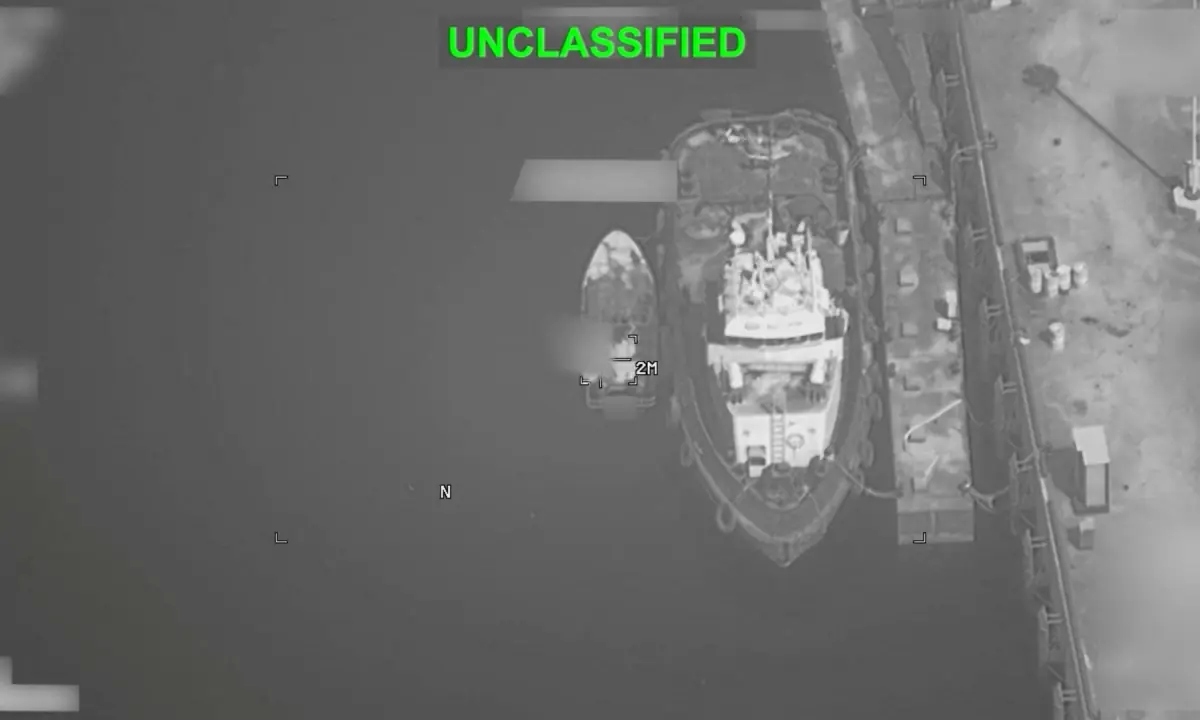
United States forces conducted their thirteenth consecutive day of airstrikes against Iran early Friday, following President Donald Trump's vow of "major military punishment" against Tehran and its Houthi allies. These actions are in response to recent attacks on two Saudi oil tankers in the Red Sea by the Yemeni rebels. The Houthi rebels, who control significant parts of Yemen, announced a naval blockade on Saudi Arabia, prompting the diversion of millions of barrels of oil daily via pipeline to the Red Sea to bypass Iran's blockade of Gulf oil through the Strait of Hormuz. The attacks in the Red Sea have now extended the conflict to a second major shipping chokepoint, raising concerns about further disruptions. Global oil prices surged, with Brent crude rising over six percent on Thursday to surpass $100 a barrel for the first time since May, though it slightly eased to $99.97 on Friday. The Bab el-Mandeb strait, a critical route from the Red Sea to the Indian Ocean, could be closed by Houthi actions, forcing tankers to take longer and more expensive routes. US Central Command stated that the latest strikes targeted Iranian military command centers, drone storage, communication networks, and maritime capabilities to reduce threats to civilian mariners. Iranian state media reported missile strikes on Qeshm Island, near the Strait of Hormuz, resulting in four deaths and five injuries. Iran's military announced drone attacks on US facilities in Bahrain and Jordan in retaliation. President Trump indicated he would hold Iran accountable for any further Houthi attacks, suggesting potential "major military punishment" and even considering re-launching combat operations in Iran. Iranian Foreign Minister Abbas Arachi warned against seizing assets for future claims, calling it an "incendiary precedent." Meanwhile, the US House of Representatives passed legislation directing Trump to halt military action against Iran, though similar resolutions have not halted the conflict.
The escalating military actions between the US and Iran, alongside Houthi rebel activities in the Red Sea, highlight the fragility of global energy supply chains and the complex geopolitical dynamics of the Middle East. The involvement of proxy forces like the Houthis, coupled with direct strikes on strategic infrastructure, creates a volatile feedback loop that can rapidly impact international markets and inflame regional tensions. The US response, framed as a defensive measure to protect maritime security, risks further entrenching Iran and potentially drawing in other regional actors. The economic consequences, including oil price volatility and the potential disruption of major shipping lanes like the Bab el-Mandeb, underscore the systemic risks associated with prolonged conflict in this critical corridor. As the conflict enters its fifth month, the challenge for policymakers will be to de-escalate without appearing weak, while navigating domestic political pressures and the long-term implications of military intervention versus diplomatic solutions in an increasingly interconnected world.
AI-generated to prompt reflection — not editorial opinion, not advice, not a statement of fact. How this works.