US Strikes Iran for Third Day; Tehran Targets US Assets in Bahrain, Jordan
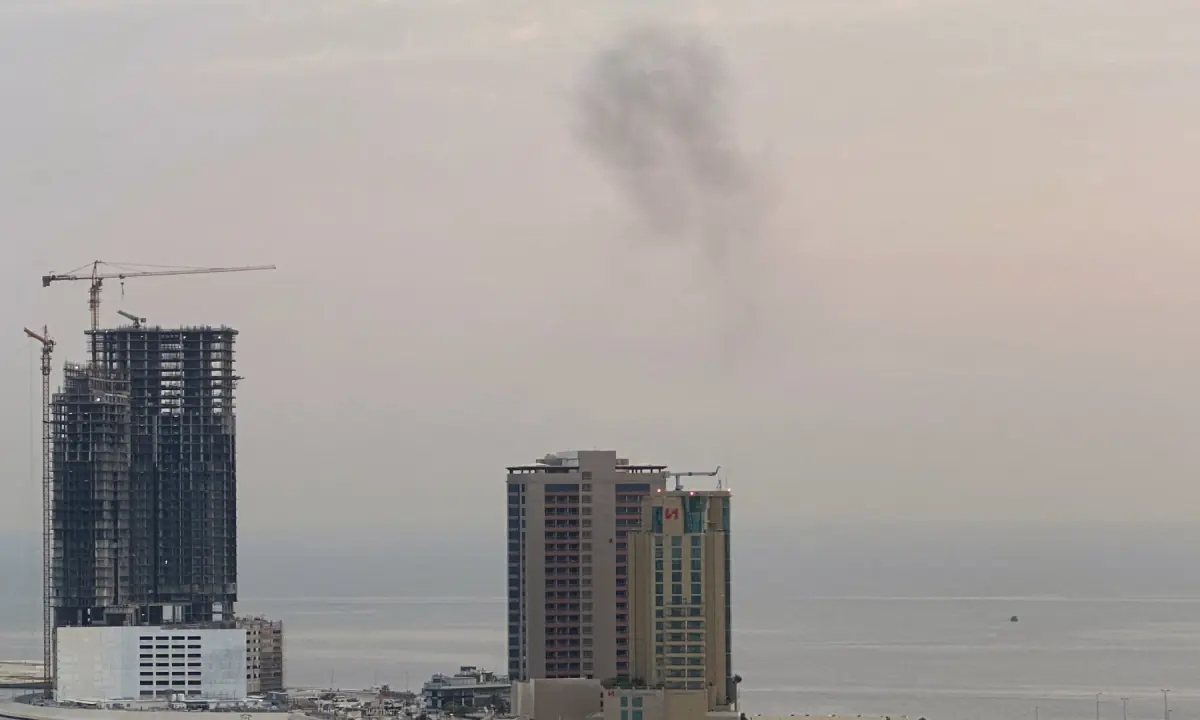
The United States conducted a third consecutive night of strikes on Iran early Tuesday, following President Donald Trump's announcement of reimposing a blockade on Iranian ports and a potential 20% fee on cargo transiting the Strait of Hormuz. Trump indicated that a diplomatic resolution with Iran remained possible despite the ongoing military actions. Iran's Revolutionary Guards Corps (IRGC) claimed to have struck two "offending supertankers" in the Strait of Hormuz, stating they ignored warnings and disabled navigation systems. The IRGC also announced missile and drone attacks targeting a residential building for US forces and other facilities in Bahrain, including a Juffair base, and claimed to have destroyed air control radar systems for the US Navy's Fifth Fleet. Additionally, Jordan's state media reported intercepting four missiles originating from Iranian territory, and the IRGC later claimed to have targeted an air base in Jordan hosting US forces with ballistic missiles. The US military stated its recent five-hour mission targeted Iranian coastal defense systems, missile and drone sites, and maritime capabilities to hinder attacks on commercial shipping, with over 50,000 US service members deployed across the Middle East. President Trump had previously notified Congress of the resumption of military conflict against Iran, granting the Pentagon additional operational time. The situation escalates doubts about efforts to achieve a permanent end to the conflict, with an expert noting that both sides are struggling to reach agreements on their terms, leading to increased attacks.
The escalating military actions between the United States and Iran, characterized by reciprocal strikes and blockades, represent a dangerous cycle of deterrence and retaliation. The imposition of fees and blockades on vital shipping lanes like the Strait of Hormuz, framed by the US as ensuring open passage and by Iran as piracy, highlights the strategic importance of this waterway and the economic leverage it provides. Both nations appear to be employing military force to achieve diplomatic objectives, a strategy that risks further destabilization and unintended escalation. The involvement of regional actors like Bahrain and Jordan, either as targets or as conduits for attacks, underscores the complex geopolitical landscape and the potential for wider conflict. This pattern of engagement suggests a systemic challenge in de-escalating tensions, where kinetic actions are used to influence negotiations, potentially leading to a protracted period of heightened risk rather than a swift resolution.
AI-generated to prompt reflection — not editorial opinion, not advice, not a statement of fact. How this works.