US Strikes Iran's Coastal Defenses; Tehran Targets US Assets in Gulf
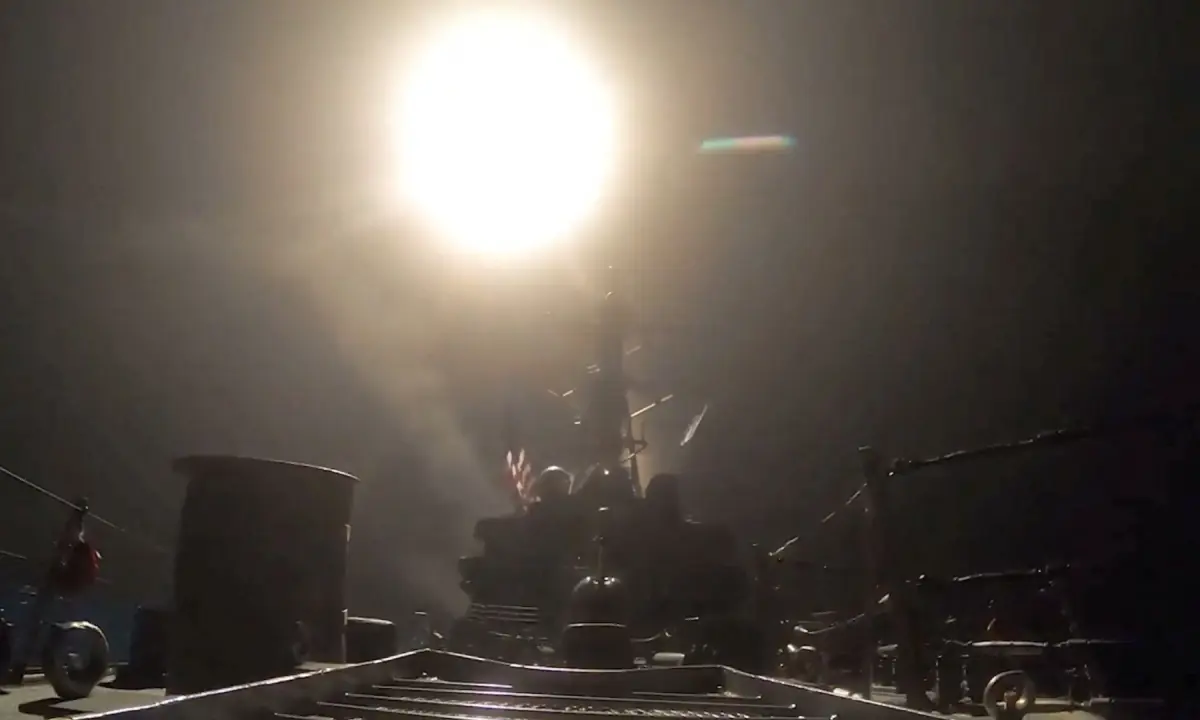
The United States launched a second wave of attacks on Iran's coastal defenses and missile sites early Thursday, less than 24 hours after reimposing a naval blockade on Iranian ports. This escalation follows the collapse of a fragile truce and raises concerns about a return to full-scale war. Iran has again targeted U.S. military sites in neighboring Gulf countries in response to the U.S. actions. Iran had previously threatened to disrupt regional energy exports and blocked the Strait of Hormuz, a vital shipping lane for oil and gas. U.S. Central Command stated that strikes targeted command centers, air defense sites, missile and drone capabilities, and coastal surveillance facilities on Greater Tunb Island, as well as sites in Bandar Abbas. The U.S. military also disabled an oil tanker that ignored warnings near Kharg Island. Iranian news reported explosions in Bandar Abbas, Ahvaz, Konarak, Sirik, and Qeshm, with air defenses activated in Tehran. Reports indicated U.S. strikes near a hospital in Ahvaz housing a pediatric cancer center. The Islamic Revolutionary Guard Corps claimed responsibility for striking U.S. military targets in Bahrain, Kuwait, and Jordan, including communication and fuel storage facilities. U.S. President Donald Trump expressed confidence in defeating Iran soon and suggested Iran was seeking a settlement, while also acknowledging Iran's release of a "wrongfully detained" American, Dena Karari, as a gesture of goodwill.
This exchange of strikes and retaliations signifies a dangerous escalation in regional tensions, potentially jeopardizing global energy markets and broader geopolitical stability. The actions highlight the persistent strategic importance of chokepoints like the Strait of Hormuz and the complex interplay between military posturing and diplomatic signaling. Both sides appear to be leveraging military operations to gain leverage in ongoing negotiations, with the U.S. employing blockade and strike tactics while Iran utilizes threats to energy exports and direct attacks on regional assets. The situation underscores the inherent volatility of asymmetric conflicts and the challenges in de-escalating hostilities when national security and economic interests are perceived to be directly threatened. Future developments will likely depend on the willingness of both parties to engage in substantive de-escalation, potentially influenced by international pressure and the economic consequences of prolonged conflict.
AI-generated to prompt reflection — not editorial opinion, not advice, not a statement of fact. How this works.