US Strikes Iran, Sparking Retaliatory Attacks on Kuwait and Bahrain
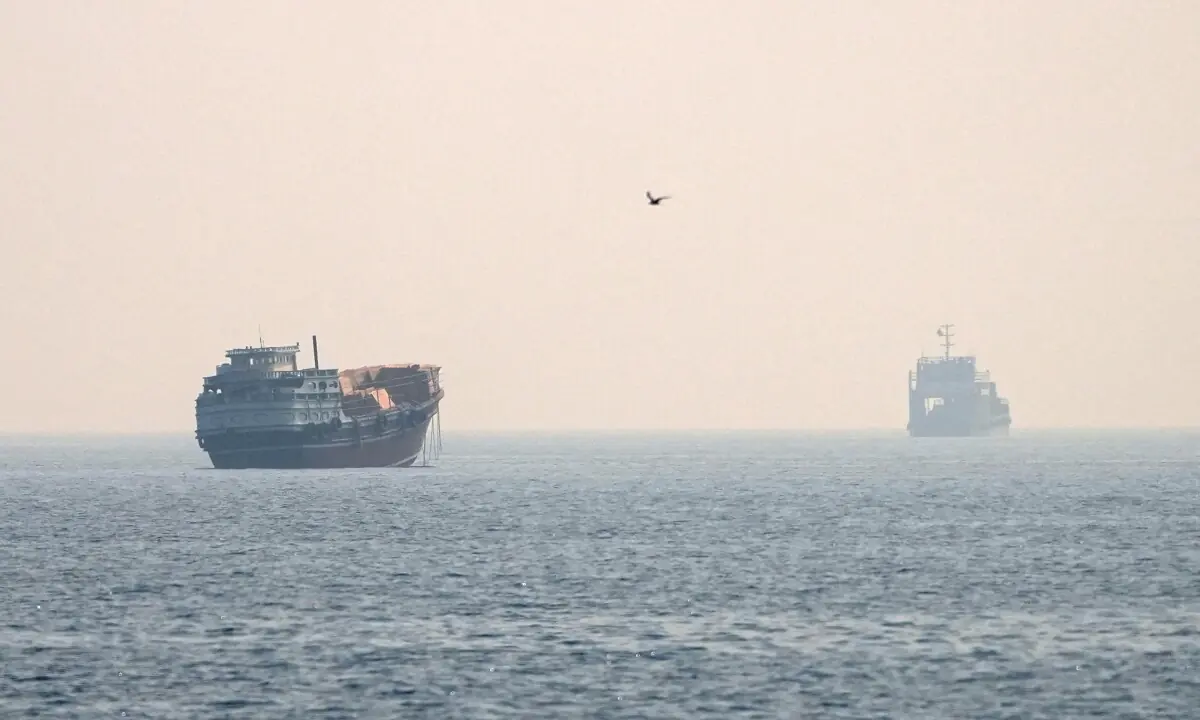
The United States military conducted new strikes against Iran on Wednesday, aiming to maintain open shipping lanes through the Strait of Hormuz. These actions were a response to Iran's prior assault on three cargo ships in the strait. US Central Command stated that the strikes were intended to degrade Iran's capability to threaten freedom of navigation. President Donald Trump reinforced this, writing on his Truth Social platform that the strikes were retribution for Iran's aggression and warned of further escalation if it occurred again. The US strikes reportedly hit several cities along Iran's southern coast, causing power outages in some areas and damaging infrastructure, including a maritime traffic control tower in Chabahar and a railway bridge near Aqqala. A firefighter was killed in a strike on the airport in Iranshahr. In retaliation, Iran's Revolutionary Guards (IRGC) announced on Thursday that they had attacked US military bases in Kuwait and Bahrain using missiles and drones. Specifically, they claimed to have struck key infrastructure at bases in Arifjan and Ali Al Salem in Kuwait, and Juffair and Sheikh Isa in Bahrain. The IRGC also warned of broader regional expansion of their response if US attacks continued. These exchanges have significantly diminished hopes for solidifying a memorandum of understanding signed on June 17, intended to end the ongoing war that began with US-Israeli attacks on Iran on February 28. President Trump expressed his belief that the interim ceasefire was effectively over, citing distrust in Iran's commitment to any agreement. Iran's top negotiator, Mohammad Baqer Qalibaf, asserted that the Strait of Hormuz would only be reopened under Iranian terms and accused the US of bullying. Iran's UN mission formally accused the United States of violating the UN Charter and the memorandum of understanding.
This escalation highlights the volatile strategic importance of the Strait of Hormuz, a critical chokepoint for global energy markets. The tit-for-tat strikes demonstrate a dangerous feedback loop where defensive actions by one party are perceived as aggressive by the other, leading to a cycle of retaliation. The involvement of US bases in allied nations like Kuwait and Bahrain introduces regional stability risks and tests the alliances' resilience. The breakdown of the memorandum of understanding suggests that diplomatic channels are fragile, and underlying geopolitical tensions continue to override de-escalation efforts. Future conflict scenarios may hinge on the ability of international actors to de-escalate through robust third-party mediation and to establish clear, mutually agreed-upon protocols for maritime security in vital waterways, rather than relying solely on unilateral military posturing.
AI-generated to prompt reflection — not editorial opinion, not advice, not a statement of fact. How this works.