US Tariffs on Brazil: Document Mentions President Trump Over Ten Times, Brazil Cites Political Motivation
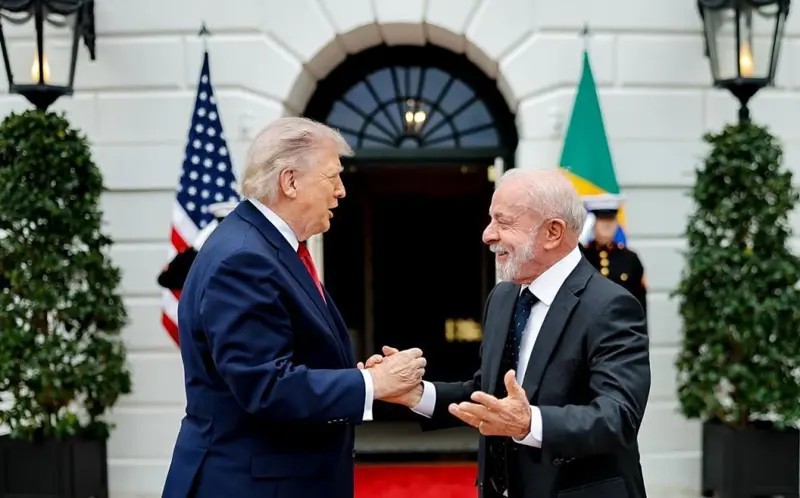
The Brazilian government has analyzed a technical document from the U.S. Trade Representative (USTR) regarding new 25% tariffs on Brazilian products. The document repeatedly mentions a "specific determination by the President" over ten times, particularly on its first page, citing President Donald Trump's directive. Brazil's Ministry of Finance interprets this frequent reference as evidence that the process against Brazil was politically motivated rather than purely technical. The investigation that led to these tariffs was initiated last year at Trump's request, based on allegations of "unfair trade practices by Brazil that restrict American exporters' access to its market for decades." The USTR concluded by recommending the surcharge on thousands of Brazilian products, which the Trump administration confirmed on Wednesday, May 15th, and is set to take effect on July 22nd. A preliminary comparison with similar USTR technical documents concerning other countries, such as France, India, Turkey, Austria, Italy, Spain, and the United Kingdom, on issues like digital taxes, and Nicaragua on labor and human rights, revealed no similar emphasis on presidential determinations. However, similar phrasing, like "president's guidance," appeared in cases against China, including tariff tranches from 2018-2019 and an investigation into trade agreement compliance. The Ministry of Finance believes that framing the issue as a "White House determination" suggests a political-presidential resolution channel, potentially shielding technical staff from administrative scrutiny.
The USTR's repeated invocation of presidential determination in its tariff imposition process, particularly highlighted by Brazil's Ministry of Finance, suggests a potential politicization of trade policy. While presidents often set broad trade objectives, the explicit linkage of specific tariff actions to a president's direct order, as noted in the document concerning Brazil and previously with China, may indicate a strategy to consolidate executive authority or insulate technical decision-making from standard administrative review. This approach could create precedents where trade disputes are increasingly framed through a political lens, potentially impacting the predictability and impartiality of international trade mechanisms. Future trade relations may see a greater emphasis on executive directives, potentially leading to more volatile and politically charged commercial environments as nations navigate these evolving governance structures.
AI-generated to prompt reflection — not editorial opinion, not advice, not a statement of fact. How this works.