US Tariffs on Brazil: International Press Highlights Bilateral Tensions Ahead of Elections
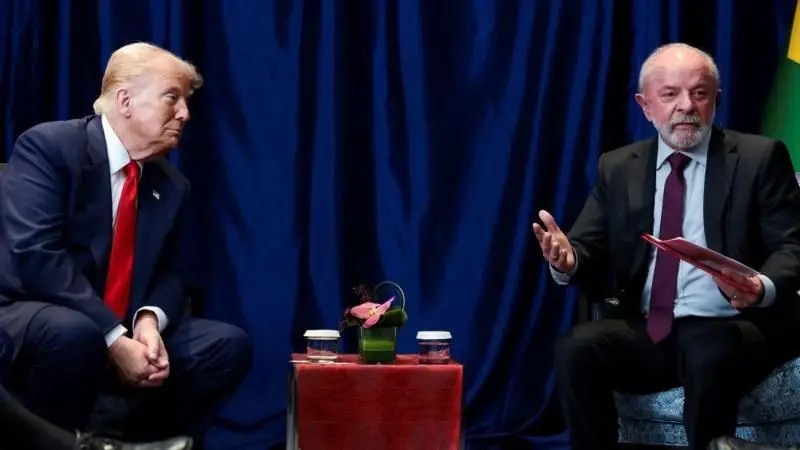
International media outlets have extensively covered the United States' decision to impose a 25% tariff on various Brazilian products, announced on Wednesday, July 15th. This move follows an investigation into Brazil's trade practices by the U.S. Trade Representative's Office (USTR) and was approved by President Donald Trump, with the tariffs set to take effect on July 22nd. The Financial Times reported that the tariffs were introduced amidst a deepening rift in bilateral relations, particularly with Brazil's upcoming elections in mind. The USTR cited unfair trade practices in areas such as electronic payments, ethanol markets, intellectual property, anti-corruption measures, and environmental protection as justification. A U.S. government source indicated to the FT that negotiations with Brazil had been ongoing for over a year, suggesting that while the U.S. seeks to assert influence in Latin America, Brazil's leftist government views these complaints as politically motivated rather than purely commercial. Reuters, via the BBC, noted that these import duties represent the latest in a series of U.S. actions against Brazil that have heightened diplomatic tensions between the two nations. Supporters of Brazilian President Luiz Inácio Lula da Silva expressed concerns that the U.S. stance could escalate and potentially interfere with the October elections. The New York Times also emphasized the potential political impact on Brazil's presidential race, noting that Lula's government accuses opposition candidate Flávio Bolsonaro of advocating for these tariffs during meetings at the White House, an accusation Bolsonaro denies. The NYT further reported that diplomatic tensions with the Trump administration have inadvertently boosted Lula's popularity, with the Brazilian leader labeling the economic measures as politically driven and accusing Trump of threatening national sovereignty. CNN International detailed the announcement, with USTR representative Jamieson Greer citing digital trade, preferential tariffs, ethanol market access, and other areas as reasons for the investigation's findings. Certain goods not produced in the U.S. and crucial for supply chains, such as coffee, beef, oranges, orange juice, and aerospace components, are exempt. Brazil's government condemned the U.S. decision as a "regrettable milestone" and announced it would initiate proceedings at the World Trade Organization (WTO) under the Reciprocity Law. The Guardian highlighted that the tariffs are based on Section 301 of the Trade Act of 1974, a law that allows for investigations into foreign trade practices. The report also referenced a U.S. Supreme Court ruling from February that limited Trump's authority under a different law, the International Emergency Economic Powers Act (IEEPA), concerning broad tariffs. Bloomberg assessed the situation as having "high risks for both countries," noting the U.S. is Brazil's second-largest trading partner and a significant source of imports. Despite the escalation, both governments are reportedly seeking to avoid a wider trade conflict, with U.S. and Brazilian officials engaging in repeated discussions to find a resolution, though Brazil has ruled out concessions it deems politically or legally unacceptable, such as changes to its Pix payment system.
The imposition of U.S. tariffs on Brazilian goods, framed by international media as a significant escalation of bilateral tensions, underscores the complex interplay between trade policy, domestic politics, and geopolitical strategy. The U.S. justification, citing unfair trade practices, contrasts with Brazil's perspective that these actions are politically motivated, particularly in the context of upcoming elections. This situation highlights a recurring challenge in international relations: how to differentiate between legitimate trade disputes and actions weaponized for political gain, especially when domestic electoral cycles are involved. The narrative suggests that while economic grievances may exist, the timing and rhetoric surrounding the tariffs point towards strategic leverage, potentially aimed at influencing regional dynamics or domestic political outcomes in both nations. The reliance on specific trade laws, such as Section 301, and the legal challenges faced by similar past actions, indicate an ongoing debate about the boundaries of sovereign trade authority versus international norms. Looking ahead, the potential for retaliatory measures and the involvement of the WTO signal a risk of broader economic conflict, necessitating careful diplomatic navigation to de-escalate tensions and uphold a stable international trade framework.
AI-generated to prompt reflection — not editorial opinion, not advice, not a statement of fact. How this works.