US Tariffs on Brazil: Trade Surplus vs. Protectionism
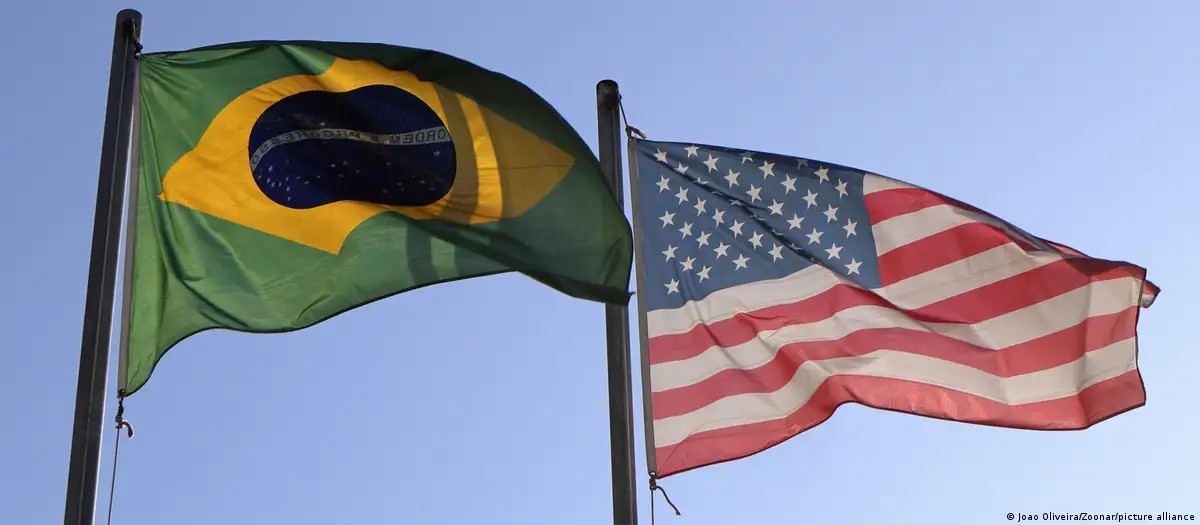
Brazil's government has rejected the United States' decision to impose a 12.5% tariff, reiterating its stance on reciprocity. Despite Brazil accumulating a $144 billion deficit over four decades of goods trade with the U.S., with Washington registering a positive balance in 26 of 41 years, the U.S. has implemented new tariffs. Including services, the U.S. profited $480 billion from Brazil between 2000 and 2025, yet faced a 25% tariff on its exports and a 12.5% tax for alleged failures in combating slave labor. Daniel Perez, the U.S. nominee for ambassador to Brasília, acknowledged the significant U.S. surplus but avoided justifying the new sanctions, stating he needed to investigate further. Jamieson Greer, head of the U.S. Trade Representative's Office (USTR), cited numerous trade barriers, both tariff and non-tariff, as justification for the measures, despite the overall U.S. surplus. Political scientist Cristina Pecequilo suggests U.S. actions are linked to Brazil's pursuit of autonomy and its role in reforming the global order, impacting U.S. interests. Historically, Brazil experienced trade surpluses with the U.S. between 1985 and 1995, with the balance fluctuating until 2008, after which the U.S. consistently maintained a surplus in goods trade. In 2025, Brazil's deficit reached $14.4 billion, more than double the previous year, while the U.S. also saw a record surplus in services trade. Economist Tomás Marques argues the tariffs aim to reorient trade flows and regain competitiveness rather than correct a non-existent deficit, with U.S. demand for certain Brazilian commodities influencing tariff exemptions. Pecequilo believes trade is secondary, with the U.S. using commercial leverage to influence Brazil in other sectors and multilateral arenas. The USTR's justification extends beyond goods trade to issues like Brazil's Pix payment system and digital platform regulations, with ethanol and agricultural competition being significant factors. The U.S. accuses Brazil of altering its special tariff treatment for U.S. ethanol imports, impacting market share.
The imposition of U.S. tariffs on Brazil, despite a long-standing bilateral trade surplus favoring the U.S., highlights a complex interplay of economic and geopolitical objectives. While U.S. officials cite trade barriers and competitiveness concerns, the timing and nature of these tariffs suggest a strategic use of trade policy to influence Brazil's broader economic and political alignments. The U.S. appears to be leveraging its position as a major importer to reconfigure trade dynamics, potentially seeking to counter Brazil's growing influence in emerging markets and its pursuit of greater autonomy on the global stage. This approach, which extends beyond direct trade disputes to encompass regulatory and political issues, raises questions about the sustainability of free trade principles when national strategic interests are perceived to be at stake. The situation underscores a global trend where trade instruments are increasingly employed as tools of foreign policy, demanding careful navigation by nations seeking to balance economic interdependence with sovereign decision-making.
AI-generated to prompt reflection — not editorial opinion, not advice, not a statement of fact. How this works.