US Tariffs on Brazilian Goods: Public Hearings Held in Washington
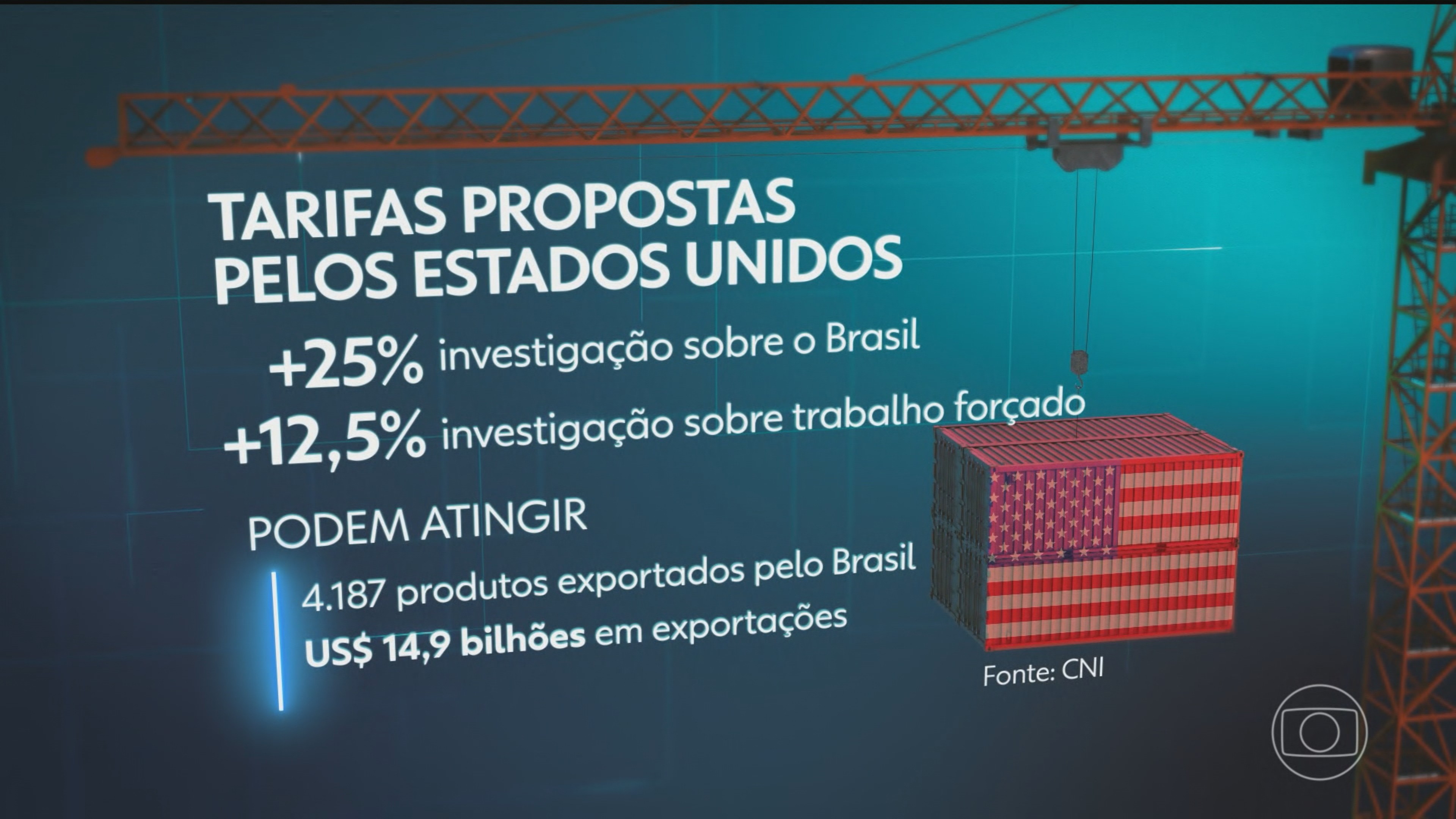
Public hearings commenced in Washington on Monday, June 6th, concerning proposed U.S. tariffs on Brazilian products. Representatives from Brazil's productive sector are aiming to demonstrate to the U.S. government that a 25% surcharge would negatively impact not only Brazilian companies but also American industries and consumers. Homero Busnello, director of refrigeration industry, stated that increased tariffs reduce the competitiveness of U.S. industries. Abrão Neto, president of the American Chamber of Commerce for Brazil, highlighted that Brazilian exports consist of inputs, machinery, and equipment crucial for American production, suggesting losses for both nations. Although the Brazilian government will not formally address the hearings, diplomats from the Brazilian embassy in Washington are attending to observe the discussions. The United States has initiated an investigation under Section 301 of its trade law, citing unfair practices by Brazil. Brazil has contested these criticisms, submitting a response by July 15th, the deadline for the U.S. decision. Additionally, the U.S. Trade Office has identified Brazil as a country failing to combat forced labor, potentially leading to a 12.5% tariff. Brazil has refuted this accusation, asserting its advanced legal framework against forced labor, which criminalizes the circulation of goods linked to slave labor throughout the supply chain. The National Confederation of Industry estimates that the combined tariffs could affect over 4,000 Brazilian export products, valued at nearly $15 billion, impacting a significant portion of Brazil's manufactured goods trade with the U.S., its primary partner in this sector. Technical teams from both countries are scheduled to meet this week to prepare for further negotiations between Brazilian ministers and U.S. Trade Representative Jamieson Greer.
The U.S. government's proposed tariffs on Brazilian goods, framed by the U.S. under Section 301 and forced labor concerns, represent a complex interplay of trade policy, national security interests, and domestic economic pressures. Brazil's counterarguments, emphasizing mutual economic detriment and its robust legal framework against forced labor, highlight the potential for retaliatory measures and global trade disruptions. The situation underscores the inherent tension between a nation's right to protect its industries and consumers and the principles of free and fair trade. As artificial intelligence increasingly influences global supply chains and economic modeling, future trade disputes may involve sophisticated data analysis and algorithmic trade practices, necessitating adaptive governance and dispute resolution mechanisms. The long-term implications hinge on whether diplomatic channels can de-escalate tensions and foster a more predictable international trade environment, or if protectionist trends will accelerate, potentially fragmenting global markets and hindering technological collaboration.
AI-generated to prompt reflection — not editorial opinion, not advice, not a statement of fact. How this works.