US to Impose Toll on Ships Transiting Strait of Hormuz, Trump Announces
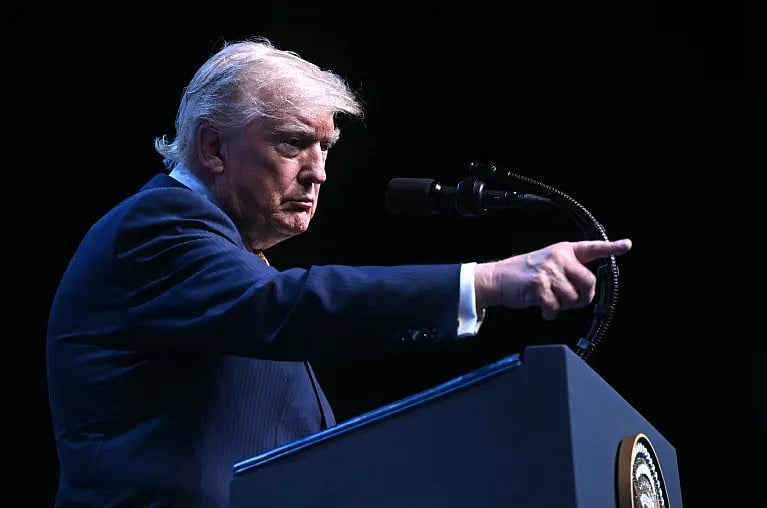
U.S. President Donald Trump has announced the re-imposition of naval blockades on Iran, specifically targeting the Strait of Hormuz. Trump stated that the United States will assume responsibility for the security of the strait and will collect tolls from ships for safe passage. Iran has immediately rejected this announcement, which comes amidst escalating tit-for-tat missile and drone attacks between the two nations. In a telephone interview with Fox News, Trump declared, "We will control the Strait of Hormuz. We will probably run it. We will be the guardians of the strait. We should be paid for this." He argued that the U.S. deserves substantial payment for this service, as the countries benefiting from the waterway are wealthy and should not expect free services. Shortly after, Trump posted on his social media platform, Truth Social, that the U.S. is re-implementing sanctions against Iran in the Strait of Hormuz. He reiterated that the U.S. will be known as the "guardian of the Strait of Hormuz" and will charge a 20% tariff on all cargo ships transiting the strait to cover security costs, with immediate effect. Trump also accused Iran of breaching an interim agreement, stating, "The deal was done; but they broke it. They always break deals. We have had ten deals with them, so this time we will hit them very hard."
The U.S. announcement regarding tolls in the Strait of Hormuz, framed as a security service fee, represents a significant escalation in economic pressure on Iran. This move, coupled with reciprocal military actions, suggests a strategic intent to leverage control over critical global trade routes for geopolitical leverage. The imposition of tolls could be interpreted as an attempt to generate revenue while simultaneously disrupting Iran's access to international commerce, potentially impacting global supply chains. Iran's firm rejection and counter-threats indicate a willingness to escalate conflict, raising concerns about regional stability. The situation highlights the complex interplay between national security interests, economic statecraft, and international maritime law, particularly in a region vital to global energy markets. Future developments will likely depend on the degree of international support for either side's claims and actions, and the potential for miscalculation leading to wider conflict.
AI-generated to prompt reflection — not editorial opinion, not advice, not a statement of fact. How this works.