US Walks Out of UN Security Council Meeting Over Human Rights Vote
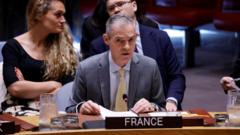
The United States delegation walked out of a United Nations Security Council meeting during remarks made by France. This action followed a vote where the U.S. joined North Korea and Russia in opposing the extension of the term for the UN High Commissioner for Human Rights. The specific details of the remarks made by France that prompted the U.S. departure were not immediately clear from the initial report. However, the preceding vote on the human rights commissioner's term appears to be the direct cause of the diplomatic friction. This incident highlights potential divisions within the Security Council on human rights issues and the functioning of international bodies. The walkout signifies a strong disagreement or protest by the U.S. regarding the proceedings or the positions taken by other member states. The UN Security Council regularly convenes to discuss critical global issues, and such walkouts, while not unprecedented, are notable displays of diplomatic discord. The implications of this event for future cooperation within the council and on human rights matters remain to be seen.
The U.S. walkout from the UN Security Council meeting, triggered by a vote on the human rights commissioner's term, underscores the complex geopolitical dynamics influencing international human rights mechanisms. The alignment of the U.S. with Russia and North Korea on this specific vote suggests a potential prioritization of strategic interests over unified human rights advocacy, or perhaps a disagreement with the specific mandate or leadership of the commissioner. This event may reflect a broader trend of nations re-evaluating their commitments to multilateral institutions based on perceived national interests and the efficacy of these bodies. Such actions can weaken the council's perceived authority and its capacity to address human rights violations globally, potentially creating space for authoritarian regimes to further consolidate power. Future diplomatic strategies may need to navigate these diverging priorities to maintain the integrity and effectiveness of international human rights frameworks in an increasingly fragmented global landscape.
AI-generated to prompt reflection — not editorial opinion, not advice, not a statement of fact. How this works.