US walks out of UN Security Council session over France's criticism
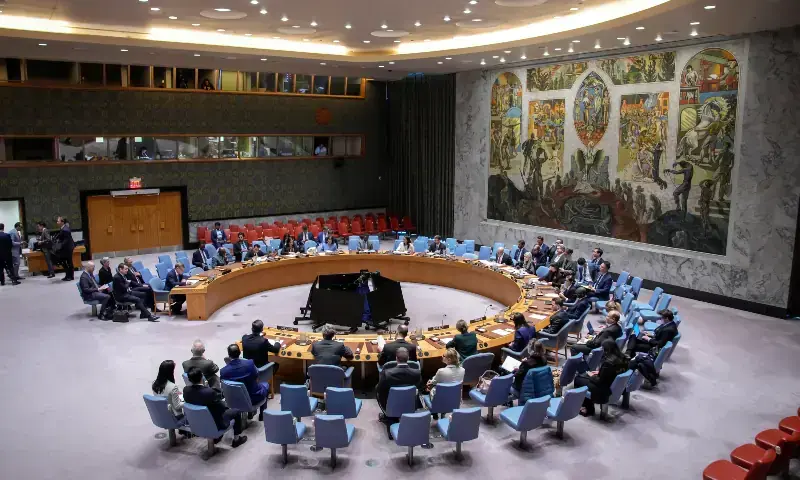
The United States delegation staged a walkout at the United Nations Security Council on Monday evening as the French ambassador began speaking, marking a rare public rift between the two allied nations. This dramatic action followed a sharp diplomatic exchange concerning human rights and the future of the UN system, specifically Washington's opposition to extending the mandate of UN High Commissioner for Human Rights Volker Turk. The US protest was ignited by French criticism after a General Assembly vote where 144 countries supported Turk's mandate extension, but the US was among only 10 nations that opposed it. France's UN Mission in Geneva had publicly stated, "The US used to be a beacon of human rights. Not anymore," and highlighted that the US voted with countries like Russia and North Korea. The US delegation, including Representative Jeff Bartos and Alternate Representative Dan Negrea, accused France of "disingenuous grandstanding" and "politicised drivel," with Negrea stating the US would boycott French statements until Paris retracted its "condescending and disrespectful rhetoric." US Ambassador Mike Waltz defended the walkout, accusing France of distracting from its own actions and supporting Turk's reappointment despite alleged biases in the UN human rights system. French Ambassador Jerome Bonnafont, while not directly addressing the walkout, emphasized France's commitment to an independent multilateral order and the historic US-France relationship. Meanwhile, Pakistan's Ambassador to the UN, Asim Iftikhar Ahmad, maintained neutrality in the dispute, focusing his remarks on the Ukraine war and its humanitarian and global security implications. The incident underscores broader disagreements between the US and some allies regarding the role and direction of international institutions.
This diplomatic rupture highlights evolving geopolitical alignments and differing perspectives on multilateral institutions. The US stance, opposing the extension of a human rights mandate and citing concerns about politicization and selectivity, suggests a potential recalibration of its engagement with global governance bodies, possibly driven by domestic political considerations or a strategic reevaluation of international commitments. France's sharp retort and subsequent US walkout underscore the tension between traditional alliances and national interests within the current international order. The incident prompts reflection on the efficacy and perceived biases of UN human rights mechanisms, and how these perceptions influence major powers' willingness to fund and support them. Future US engagement with such bodies may depend on perceived reforms and alignment with American foreign policy objectives, potentially leading to a more fragmented multilateral landscape.
AI-generated to prompt reflection — not editorial opinion, not advice, not a statement of fact. How this works.