Vandalism at Soviet War Cemetery in Leusden Proves Difficult to Clean
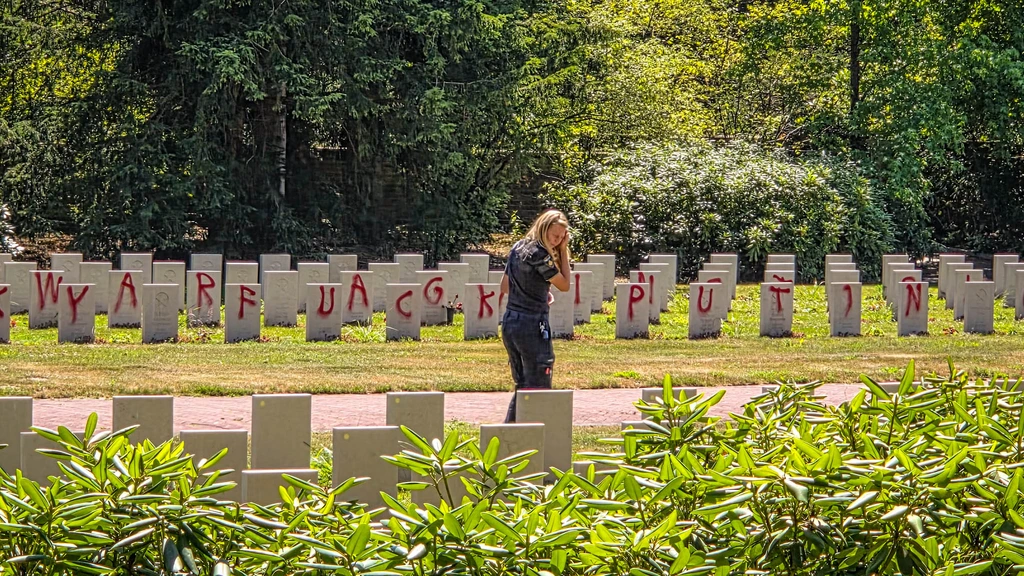
Workers are struggling to remove red paint from approximately 150 graves at the Soviet War Cemetery in Leusden, Netherlands, after a vandalism incident. The paint has penetrated the porous stones, making removal challenging. The damage occurred overnight between Thursday and Friday, with slogans targeting both the Russian and Ukrainian presidents, as well as phrases like "fuck communism" and "white power," spray-painted on the graves. The abbreviation "NS/WP," associated with white supremacist and neo-Nazi groups, was also found on the memorial column. No arrests have been made, and police are investigating the incident. The cemetery is currently closed to visitors to allow specialists to work on cleaning the affected gravestones. Remco Reiding, director of the Soviet War Cemetery Foundation, expressed concern that some stains may be permanent, potentially requiring the replacement of gravestones. He emphasized the importance of maintaining the dignity of the resting place for those who fought against Nazi Germany. Relatives of the war victims have been informed and are reportedly distressed by the disturbance to the peace of their loved ones, who are buried far from home. The cemetery holds the remains of 865 war victims from the former Soviet Union who died on European soil during World War II, primarily Red Army soldiers. The foundation, funded by donors, supports identity research, commemorations, and visits by relatives. The director noted a decline in donors and tour cancellations in 2023 following the Russian invasion of Ukraine, calling it absurd to hold deceased soldiers accountable for current political actions. This is not the first instance of vandalism; in 2021, the war monument was defaced with "Fuck BLM."
This act of vandalism at the Soviet War Cemetery in Leusden, targeting graves of soldiers who fought against Nazi Germany, presents a complex intersection of historical memory and contemporary geopolitical tensions. The difficulty in removing the paint highlights the physical challenges of preservation and the potential for lasting damage to historical sites. The motivations behind the slogans, potentially linked to far-right extremism and current international conflicts, suggest a deliberate attempt to co-opt historical grievances for present-day political messaging. This incident underscores the vulnerability of memorial sites to ideological conflict and the ongoing debate surrounding the interpretation and appropriation of history in public spaces. The financial and emotional toll on the foundation and relatives, coupled with the logistical challenges of restoration, points to the broader systemic issues of maintaining historical integrity amidst evolving societal and political landscapes.
AI-generated to prompt reflection — not editorial opinion, not advice, not a statement of fact. How this works.