VAR corrects mistaken identity, rescinds Paredes yellow, expels Embolo
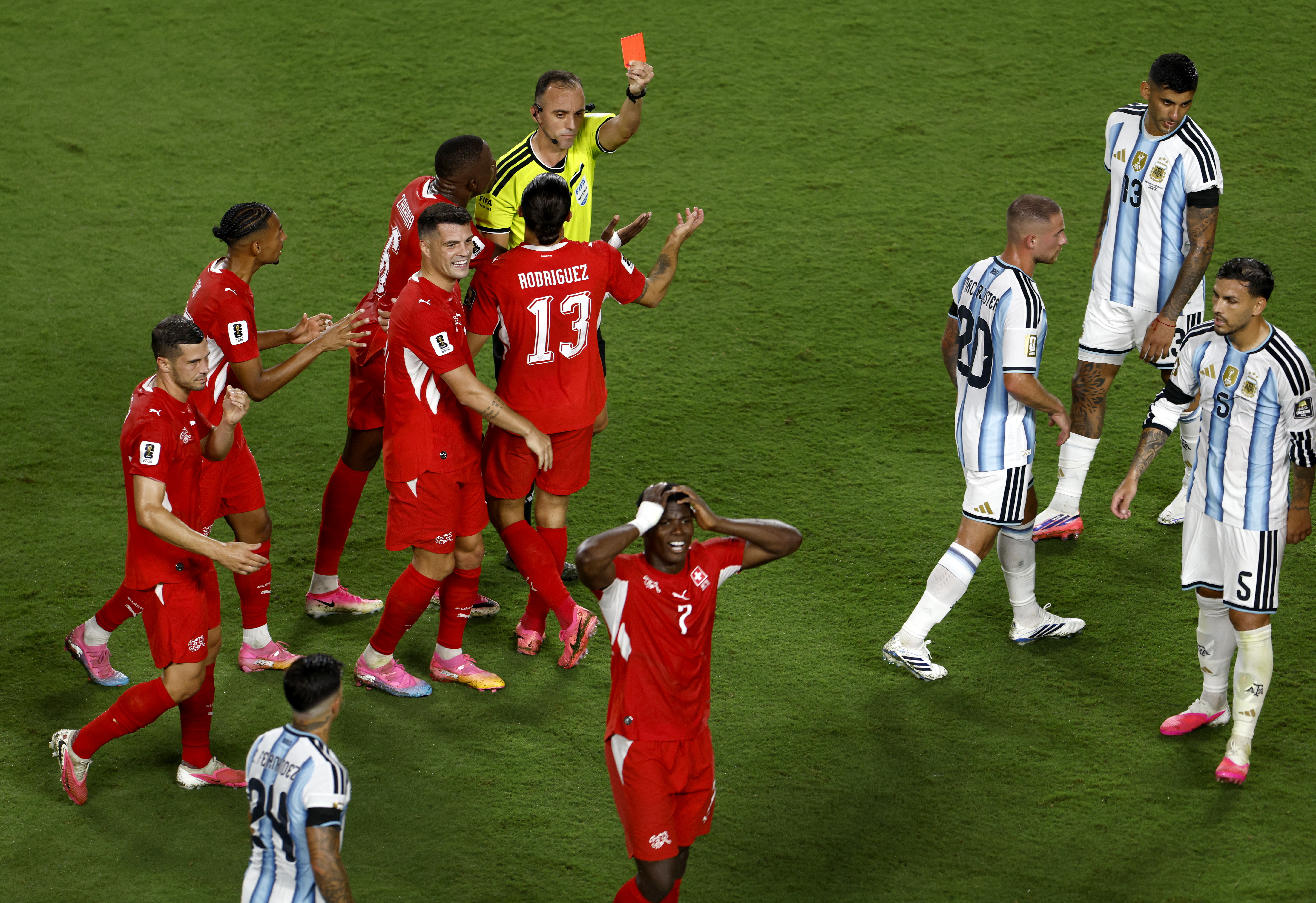
During the 2026 World Cup, a VAR review under the mistaken identity protocol led to a significant officiating change. Referee João Pinheiro initially issued a yellow card to Argentinian player Leandro Paredes. However, upon reviewing the incident, the VAR system identified that Paredes was not the player who committed the offense. Consequently, Pinheiro revoked the yellow card shown to Paredes. The review then revealed that Swiss player Breel Embolo was the player who had committed the infraction leading to a second yellow card. This second yellow card resulted in Embolo's expulsion from the match. The situation drew parallels to a previous incident involving Miguel Almirón.
This VAR intervention highlights the system's capacity to correct officiating errors, particularly concerning player identification. While such corrections enhance fairness by ensuring the correct player is sanctioned, they also underscore the ongoing challenges in real-time decision-making within high-stakes sporting events. The protocol's effectiveness in rectifying mistaken identity, as seen with Leandro Paredes and Breel Embolo, demonstrates a procedural safeguard. However, the reliance on technology for such fundamental aspects of the game prompts reflection on the evolving balance between human judgment and automated systems in professional sports, and the potential for future technological advancements to further refine accuracy and reduce the frequency of such errors.
AI-generated to prompt reflection — not editorial opinion, not advice, not a statement of fact. How this works.