VAR's Grip on Football Weakens Despite Initial Promise
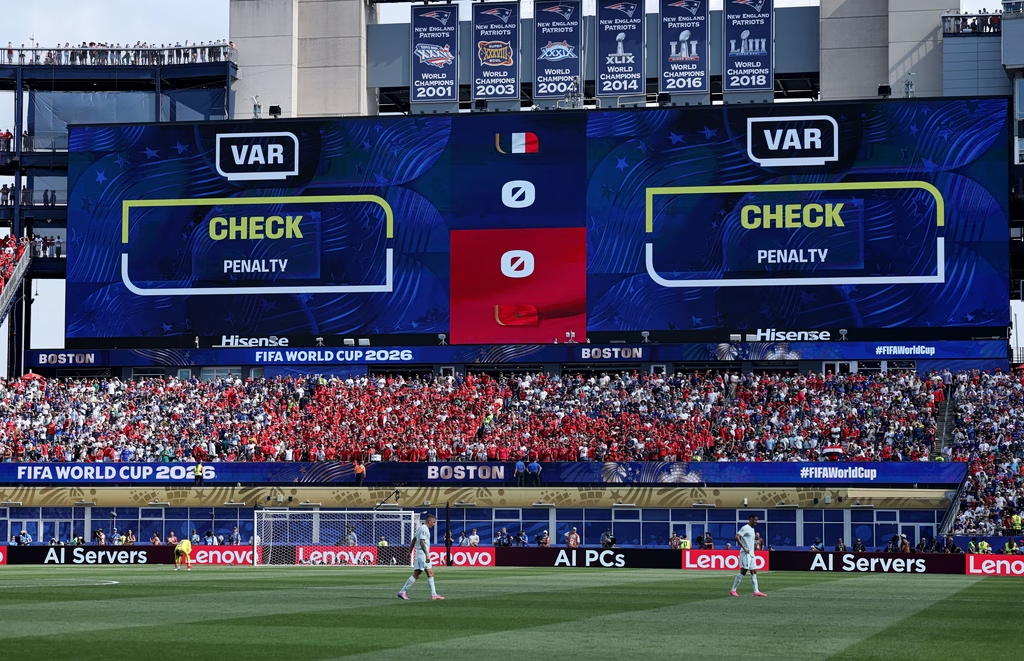
The Video Assistant Referee (VAR) system, introduced to football in 2018 during the World Cup in Russia, initially promised a revolution in the sport. The technology aimed to bring significant changes, altering the viewing experience and the nature of officiating. However, the initial phase was marked by considerable adjustment challenges for everyone involved, from players and coaches to referees. Even minor infractions, such as a touch or jersey pull during a corner kick, would lead referees to consult the mini-monitor on the sidelines. This reliance on the technology and the subsequent adjustments created a noticeable shift in how games were perceived and managed. Despite its revolutionary intentions, the system has faced ongoing scrutiny and adaptation issues.
The introduction of VAR in 2018 represented a significant technological intervention intended to enhance the accuracy of football officiating. While initially hailed as a revolutionary step, the system's implementation has revealed complexities in its application and interpretation, leading to a period of adjustment for all stakeholders. The ongoing debate surrounding VAR highlights a tension between the pursuit of perfect officiating and the preservation of the game's natural flow. Future iterations may need to balance technological precision with the organic dynamics of live sports, considering how such systems impact player behavior and spectator experience over the long term. The evolution of VAR will likely be shaped by a continuous process of refinement, aiming to integrate its benefits without fundamentally altering the essence of the sport.
AI-generated to prompt reflection — not editorial opinion, not advice, not a statement of fact. How this works.