Vehicles Flout Rules on Dhaka-Chattogram Highway, Raising Accident Risks
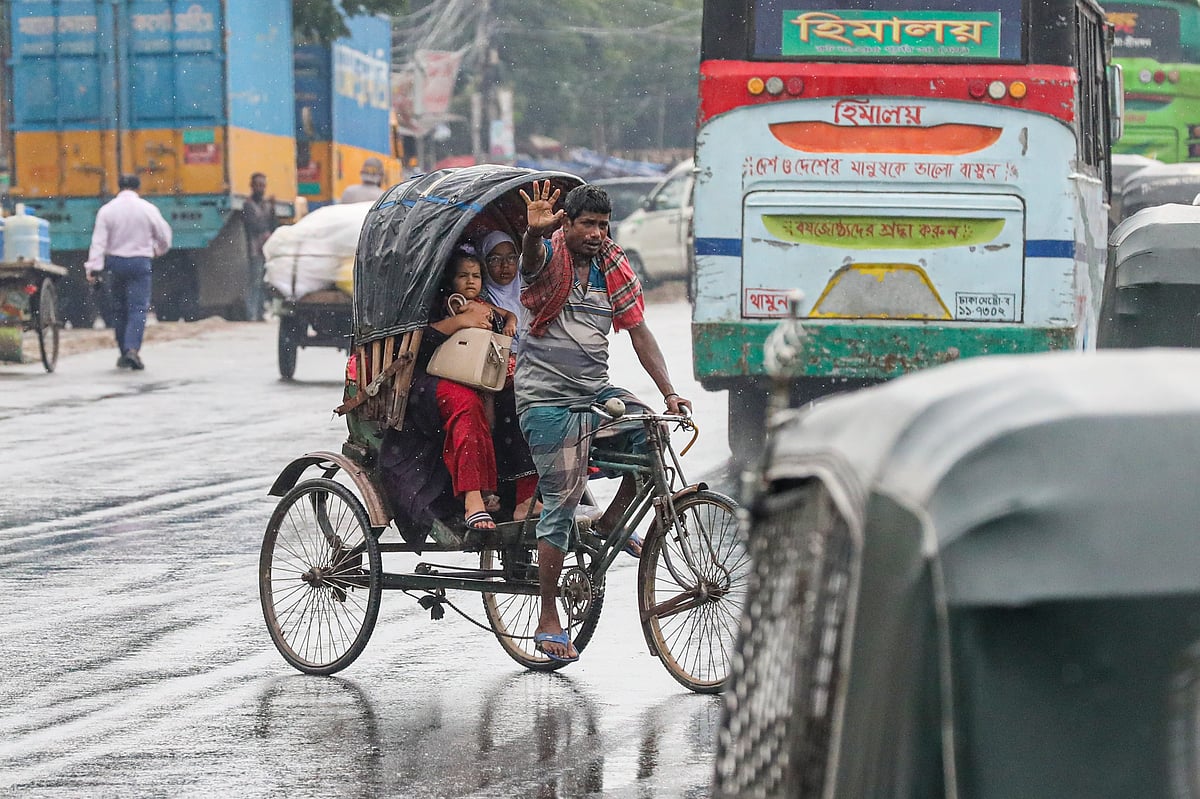
Illegal and uncontrolled vehicles are operating on the Dhaka-Chattogram highway, disregarding traffic laws and safety regulations. Many vehicles, including rickshaws, vans, and motorcycles, are traveling in the wrong direction, while battery-powered auto-rickshaws are crossing bridges in violation of prohibitions. Pedestrians are also taking significant risks by crossing the road over the central dividers. The presence of vehicles without proper fitness certificates exacerbates the danger, leading to a constant increase in accident potential.
Incidents captured on July 18th and 19th highlight these issues. In Matuail, a rickshaw driver was seen operating against traffic with women and children as passengers, while in the Kanchpur area, battery-powered auto-rickshaws were seen defying restrictions on bridge crossings. Pedestrians were observed dangerously navigating the road dividers in Shonir Akhra and Matuail. The summary also notes the poor condition of public transport in the capital, with passengers facing difficulties due to broken windows on rainy days. Furthermore, unfit buses were seen emitting black smoke in Matuail, and a police member was observed riding a motorcycle against traffic in the same area.
A specific incident in Matuail on July 19th involved a battery-powered auto-rickshaw overturning while traveling the wrong way, injuring its driver and passengers. This event underscores the daily occurrences of minor and major accidents on the Dhaka-Narayanganj highway attributed to the uncontrolled movement of unregistered and illegal battery-powered auto-rickshaws.
The widespread disregard for traffic laws and safety regulations on the Dhaka-Chattogram and Dhaka-Narayanganj highways indicates a systemic breakdown in enforcement and public adherence to rules. The proliferation of unregistered and unfit vehicles, coupled with risky pedestrian behavior, suggests that current regulatory frameworks and enforcement mechanisms are insufficient to manage the volume and nature of traffic. This situation creates a high-risk environment where accidents are not isolated incidents but predictable outcomes of inadequate governance and infrastructure management. Looking ahead, addressing this requires a multi-pronged approach, including stricter enforcement, public awareness campaigns, and potentially a re-evaluation of vehicle registration and road infrastructure to accommodate diverse transport modes safely and efficiently, preventing future tragedies.
AI-generated to prompt reflection — not editorial opinion, not advice, not a statement of fact. How this works.