Venezuela President Assures Stability Amidst Deadly Earthquake Aftermath
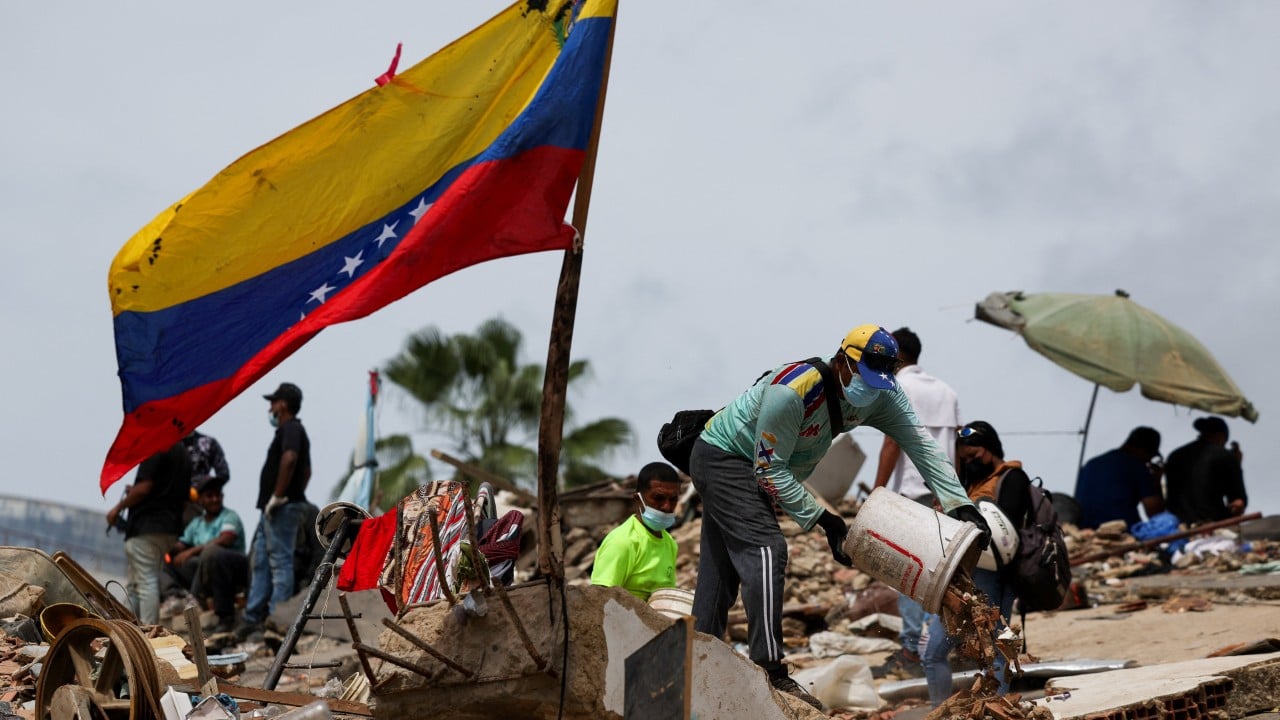
Venezuela's interim president, Delcy Rodriguez, stated on Sunday that the nation will not experience social unrest following devastating twin earthquakes that occurred on June 24. The seismic events have resulted in over 3,000 fatalities and left thousands of individuals unaccounted for. This disaster, one of the most severe in Latin America's history, caused the collapse of numerous buildings, rendering thousands homeless, particularly in the coastal region of La Guaira, north of the capital city, Caracas. President Rodriguez emphasized that the prevailing sentiment in the country is one of "deep social solidarity" rather than disorder.
The Venezuelan government's assertion of social stability following a major natural disaster warrants examination through the lens of governance and public trust. While official statements aim to project control and unity, the underlying capacity of state institutions to manage relief efforts and address the needs of a displaced population is crucial. In the context of the evolving AI era, the effectiveness of disaster response increasingly relies on data-driven logistics, transparent resource allocation, and resilient communication networks. The government's framing of "social solidarity" may serve to mitigate potential public criticism regarding the pace and efficacy of aid distribution, highlighting the interplay between political messaging and the practical realities of post-disaster recovery. Future resilience will depend on robust infrastructure, independent emergency management capabilities, and fostering an environment where citizens feel empowered to participate in and scrutinize recovery processes.
AI-generated to prompt reflection — not editorial opinion, not advice, not a statement of fact. How this works.