Venezuela quake survivors face economic devastation amid recovery efforts
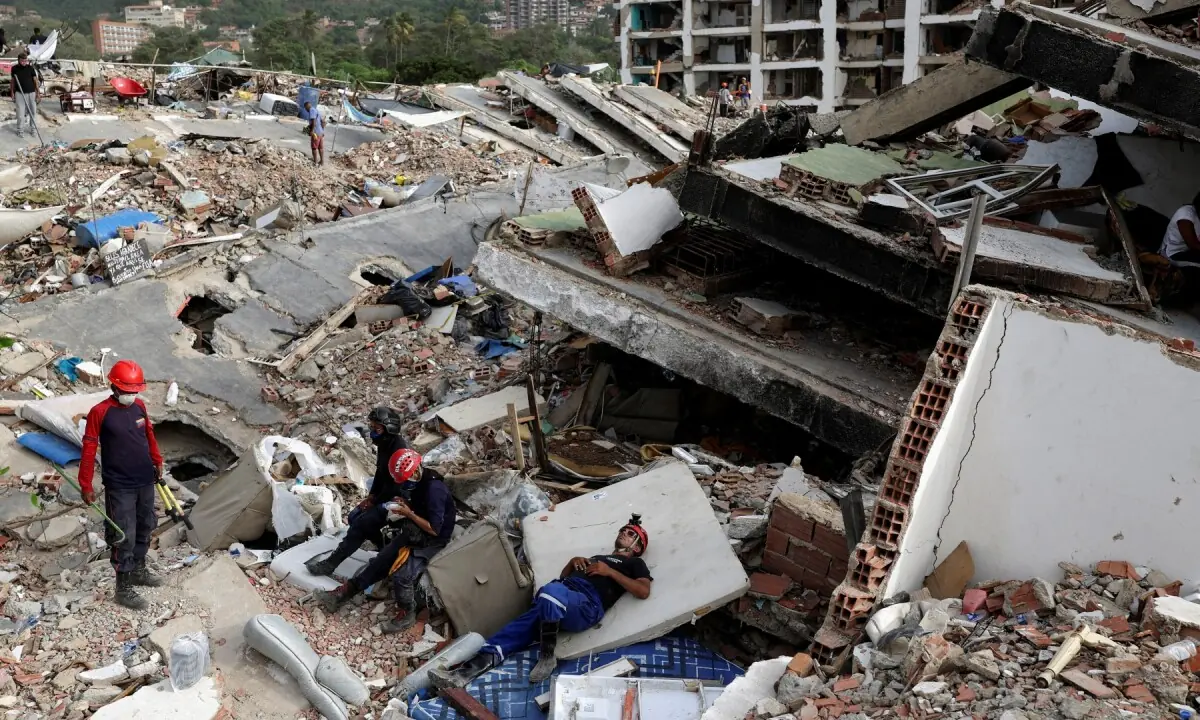
Two weeks after twin earthquakes struck Venezuela's coast, residents of La Guaira are grappling with severe economic uncertainty on top of the physical destruction. The 7.2 and 7.5 magnitude tremors on June 24 decimated the city, a popular getaway near Caracas, leaving behind mountains of rubble and an estimated $37 billion in material damage, according to the UN Office for Disaster Risk Reduction. The disaster claimed over 4,000 lives and injured nearly 17,000 people, exacerbating existing economic woes.
Many small business owners, like Faisuris Alvarez, who ran a beachside fish stand, are uncertain about their future income and ability to find work. Luis Baena, owner of the "Bilight" lighting equipment business, saw his warehouse destroyed, looted, and burned, impacting over 60 households that depended on his operations. While some businesses in Maiquetia, the economic hub with the port and airport, are tentatively reopening, the overall outlook remains bleak. Economist Asdrubal Oliveros noted that beyond direct losses, indirect effects on trade, transportation, supply chains, employment, and consumption are significant.
The success of the recovery hinges on effective state oversight, with Oliveros emphasizing the need for sufficient resources, capable institutions, and confidence-building rules for investment. As rescue efforts conclude and some residents depart due to economic hardship or trauma, the city faces a long road to recovery, though some, like Baena, remain determined to rebuild and make La Guaira habitable again.
The aftermath of the Venezuelan earthquakes highlights the critical interplay between natural disaster response and pre-existing economic fragility. The scale of destruction, estimated at $37 billion, presents a formidable challenge, particularly in a nation already contending with economic instability. The looting and subsequent destruction of businesses like "Bilight" suggest that security and rule of law are paramount for effective recovery, not just for immediate relief but for fostering future investment. The state's capacity to manage reconstruction resources, establish transparent governance, and instill investor confidence will be a key determinant of La Guaira's long-term economic viability. Without these foundational elements, the rebuilding process risks exacerbating existing vulnerabilities and prolonging the suffering of survivors, potentially leading to further displacement and social unrest.
AI-generated to prompt reflection — not editorial opinion, not advice, not a statement of fact. How this works.