Venezuelan Man Rescued After Surviving a Week Under Earthquake Rubble
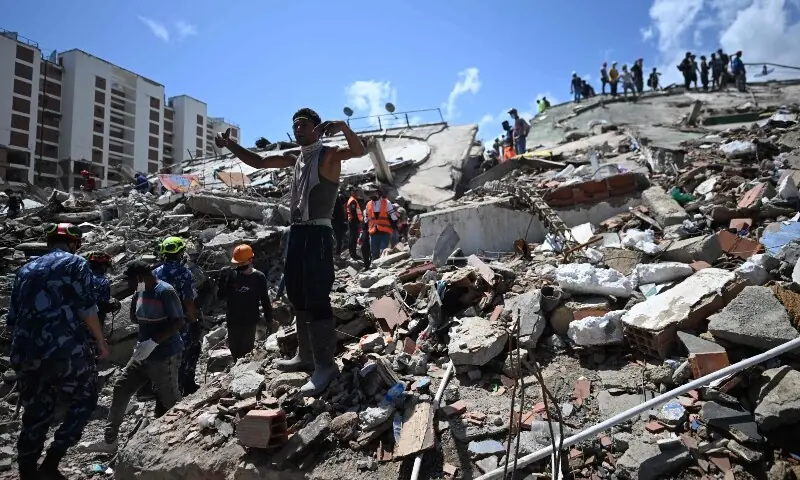
A remarkable rescue operation unfolded in Catia La Mar, Venezuela, as hundreds of rescuers worked tirelessly to save Hernan Gil, a 43-year-old security guard, who had been trapped for a full week beneath the collapsed seven-story building where he worked. Gil was located inside his booth under the debris following the devastating magnitude 7.2 and 7.5 twin earthquakes that struck on June 24, causing widespread destruction in the coastal area. Rescue teams from seven nations—Venezuela, Chile, the United States, Portugal, Costa Rica, El Salvador, and Mexico—collaborated for three days, working around the clock in a complex effort to reach him. By late Wednesday, rescuers were within a meter of his position, having supplied him with water and air through tubes. The operation faced significant challenges, including the instability of the neighboring building and the presence of large pillars hindering access, forcing rescuers to adapt their strategy after an initial tunneling plan was abandoned. The successful extraction of Gil, described by his wife as a "miracle," occurred as broader hopes for finding more survivors began to fade, with the earthquakes having claimed nearly 2,300 lives and leaving thousands unaccounted for.
This extraordinary survival highlights the resilience of the human spirit and the critical role of international cooperation in disaster response. The multi-national rescue effort, involving seven countries, demonstrates a powerful, albeit reactive, global solidarity mechanism for catastrophic events. From a systems perspective, the incident underscores the vulnerabilities inherent in urban infrastructure subjected to extreme seismic activity and the complex logistical and engineering challenges in high-stakes rescue operations. The adaptive strategies employed by the rescue teams, such as modifying tunneling plans due to structural instability, reflect crucial problem-solving under immense pressure. Looking ahead, such events may increasingly inform the development of more robust building codes, advanced early warning systems, and standardized international protocols for rapid disaster deployment, particularly in seismically active regions. The focus on collaboration and innovative engineering in this instance offers a model for future crisis management, emphasizing preparedness and coordinated response capabilities in an era of heightened environmental and geological risks.
AI-generated to prompt reflection — not editorial opinion, not advice, not a statement of fact. How this works.