Venezuelan woman refuses to leave earthquake rubble where family died
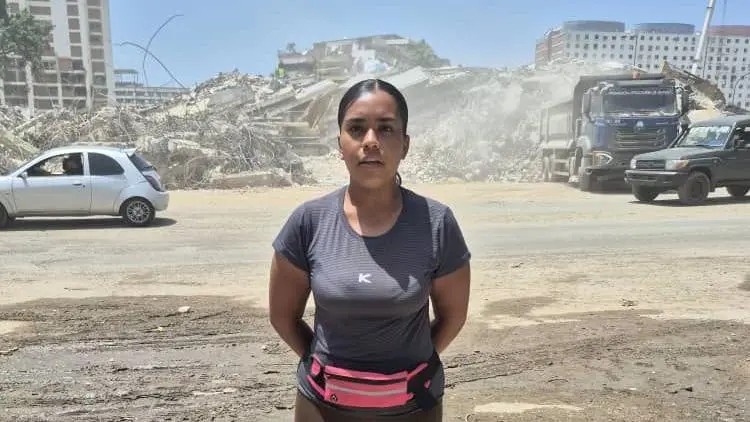
Lorena Laya has remained at the ruins of the OPP 27 building in La Guaira, Venezuela, for three weeks following two earthquakes that struck on June 24. She stays by the excavator during the day, removing debris, and sleeps at her paternal grandfather's house at night, only returning to her home in Caracas for clean clothes. Lorena is searching for her father, Henry Laya, 55; her stepmother, Nohelia Iriarte, 45; and her younger siblings, Diego, 14, and Giannys, 6, who lived in the now-destroyed building. She insists on staying to ensure her family's bodies are not lost in the rubble, recounting an instance where bodies were almost taken away by machinery. Lorena's family has a history of tragedy, as her stepmother's family lost their home in the devastating Vargas mudslides of December 1999, which killed between 10,000 and 30,000 people. After years in shelters, they received an apartment in the OPP housing complex, which was later destroyed by the recent earthquakes. The collapse of numerous housing units has led to criticism of the Venezuelan government regarding construction quality. Lorena last spoke to her stepmother, who mentioned attending a local festival on the day of the earthquakes. Upon arriving in La Guaira, Lorena searched hospitals and morgues, describing the harrowing experience of seeing bodies piled in a parking lot, treated with indifference. She eventually began digging through the rubble herself before heavy machinery was brought in. On July 10, 16 days after the earthquakes, Lorena recovered the remains of her stepmother and younger sister, Giannys, identifying them by personal belongings. She continues to search for her father and brother, fearing they may not be found due to their deteriorated state. Official reports indicate 4,930 deaths, 16,740 injuries, and 17,907 displaced people from the earthquakes, with the UN estimating 50,000 missing.
The recent earthquakes in Venezuela highlight the critical need for robust infrastructure and disaster response protocols. The story of Lorena Laya underscores the profound human cost when such systems falter, particularly concerning the recovery of loved ones and the dignity afforded to victims. The collapse of numerous housing units, part of the Gran Misión Vivienda Venezuela program, raises significant questions about construction standards, material quality, and oversight mechanisms. Future resilience will depend on transparent governance, rigorous building codes, and equitable resource allocation to ensure that public housing projects serve their intended purpose without becoming future hazards. The long-term impact on survivors and the community's trust in state institutions will be shaped by the effectiveness and empathy of the ongoing recovery and reconstruction efforts.
AI-generated to prompt reflection — not editorial opinion, not advice, not a statement of fact. How this works.