Venus Shines in Evening Sky as Other Planets Join Early Morning Display
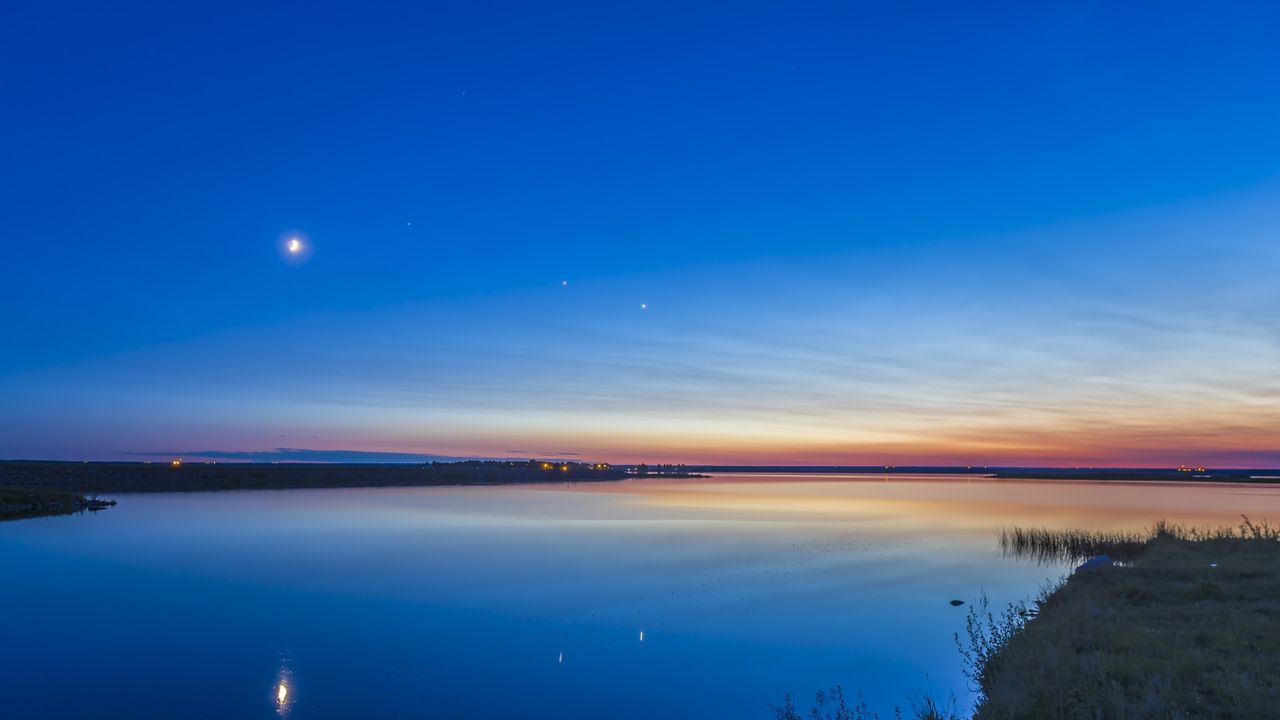
Venus is currently the most prominent planet visible in the evening sky, offering a dazzling celestial display. Meanwhile, Saturn, Mars, and Uranus are putting on a show for observers who rise early in the morning. This changing planetary lineup provides opportunities for stargazers to witness multiple celestial bodies throughout the day and night. The visibility of these planets depends on their orbital positions relative to Earth and the Sun. Observers can look forward to these distinct viewing experiences in July. The evening sky will be dominated by Venus, while the pre-dawn hours will feature Saturn, Mars, and Uranus. This arrangement offers a dynamic celestial panorama for amateur astronomers and casual observers alike.
The current planetary alignment presents a recurring astronomical event driven by orbital mechanics, offering distinct viewing opportunities for observers. The prominence of Venus in the evening sky and the visibility of Saturn, Mars, and Uranus in the early morning highlight the predictable cycles of our solar system. This phenomenon underscores the importance of accessible astronomical data and public engagement with science education. Future advancements in observational technology and citizen science initiatives could further enhance public participation in tracking and understanding celestial events, fostering a deeper appreciation for planetary science and the vastness of space.
AI-generated to prompt reflection — not editorial opinion, not advice, not a statement of fact. How this works.