Veterinarian Cares for Rescued Hummingbird Fledgling in Brazil
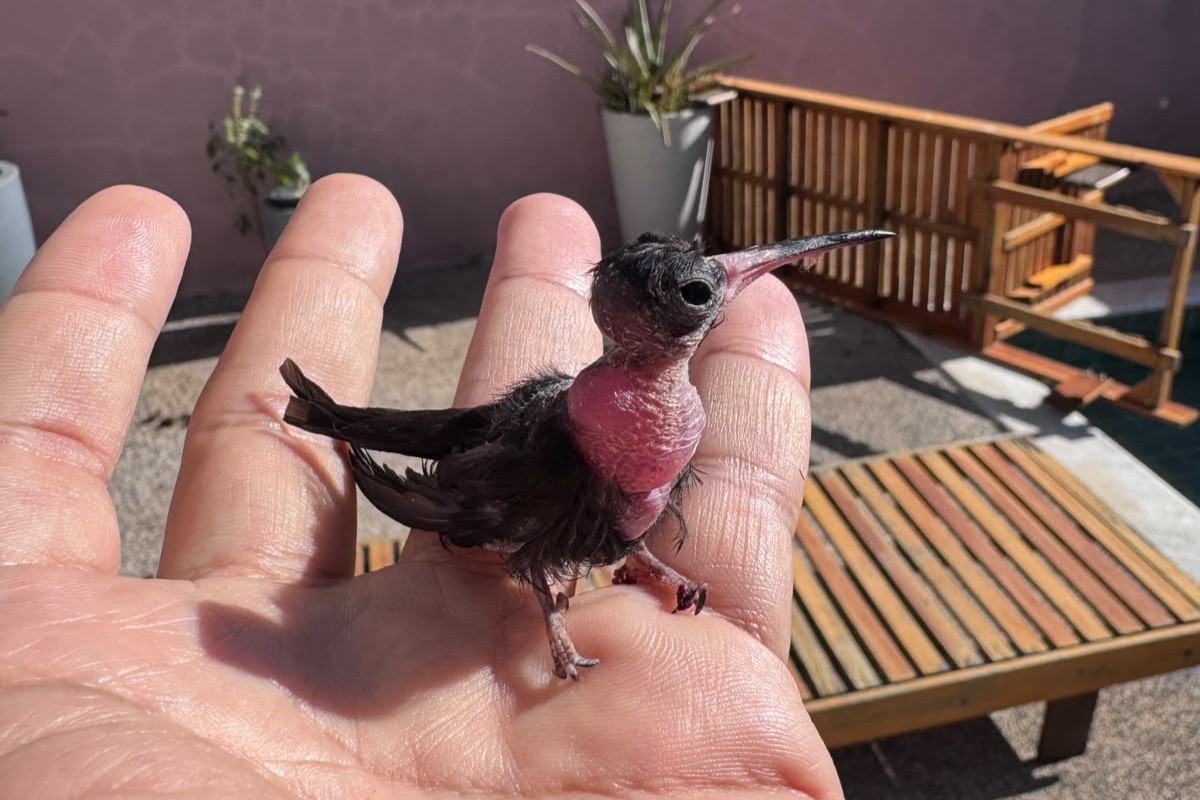
A hummingbird fledgling, rescued over two months ago in Presidente Prudente, São Paulo, Brazil, is making significant progress under the care of veterinarian Luís Felipe Zulim. The young bird is becoming more independent, showing new colorful feathers, and exhibiting increased activity and alertness. It has begun taking short, low flights, indicating developing strength and coordination. To ensure its safety from household pets, the fledgling stays in the veterinarian's bathroom when unsupervised, where it is often found attempting flights.
Despite its advancements, the bird remains highly dependent on Zulim for feeding, though it can now eat and drink from a dish when the veterinarian is not present. Full independence requires strong flight capabilities and complete feather development, which is not yet estimated. The veterinarian's social media followers are tracking the bird's recovery, which includes feeding, water training, perch exercises, and sunbathing. Another veterinarian, Amanda Abonizio, has assisted with baths to remove residue from its initial formula feeding, noting that hummingbirds are very clean animals. It is anticipated that the bird will not fully develop its adult plumage until the spring molt.
Hummingbirds, belonging to the Trochilidae family, are among the smallest birds globally with extremely fast metabolisms, requiring frequent feeding to sustain their high energy demands. They possess the unique ability to hover and fly backward. Their diet consists of nectar and small insects, providing essential proteins and fats. Hummingbirds play a crucial ecological role as pollinators. The rescued fledgling initially required feeding every 20-30 minutes, a demanding schedule that has gradually decreased. The veterinarian is focused on preparing the bird for release into its natural habitat, emphasizing that rescuing wild animals requires proper knowledge and handling, and advising the public to contact environmental agencies or wildlife veterinarians in such situations.
This heartwarming narrative highlights the dedication of an individual veterinarian in rehabilitating a vulnerable wild animal. The case underscores the complex needs of specialized species like hummingbirds, particularly their high metabolic rates and specific dietary requirements, which present significant challenges for captive care. The veterinarian's proactive approach in seeking expert advice and adapting care protocols, such as providing warmth and specialized feeding, demonstrates a commitment to the bird's welfare and eventual release. It also implicitly raises questions about the broader systemic support for wildlife rehabilitation, the prevalence of orphaned or injured wild animals, and the public's understanding of appropriate intervention. As climate shifts and habitat pressures intensify, the role of such dedicated individuals and organizations in conservation and species survival may become even more critical, necessitating robust public and institutional frameworks to support these efforts.
AI-generated to prompt reflection — not editorial opinion, not advice, not a statement of fact. How this works.