Victims March in Kathmandu Against Microfinance Exploitation
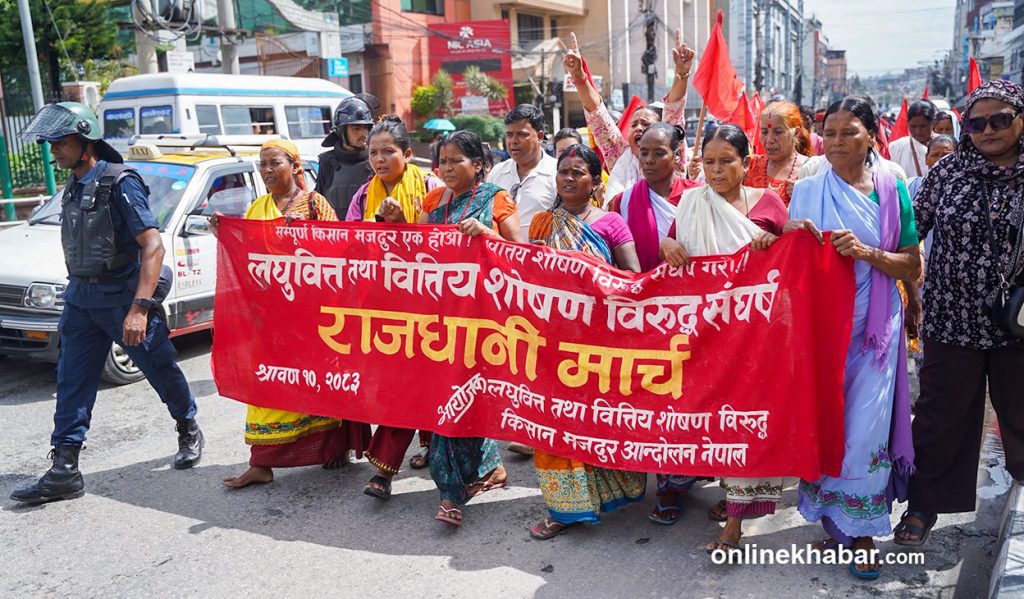
Victims of financial exploitation organized a 'Capital March' in various parts of Kathmandu, culminating in a demonstration at Maitighar on Sunday. The protest was held under the central slogan, 'Let all farmers and laborers unite and struggle against financial exploitation.' Participants aimed to raise awareness and demand an end to exploitative practices by microfinance institutions. The march highlighted the grievances of those who feel victimized by the financial sector. The event underscored the growing discontent among vulnerable populations facing economic hardship. Demonstrators called for systemic changes to protect citizens from predatory lending. The protest signifies a collective effort to seek justice and fair financial services. The 'Capital March' served as a platform for victims to voice their concerns publicly. The demonstration aimed to pressure authorities and financial institutions to address the issue of financial exploitation.
This demonstration reflects a growing public concern regarding the practices of microfinance institutions and their impact on vulnerable populations, particularly farmers and laborers. The protest highlights a potential systemic issue where financial inclusion initiatives may inadvertently create avenues for exploitation due to inadequate regulatory oversight or enforcement. The core tension lies between the stated goals of microfinance—poverty alleviation and economic empowerment—and the reported reality of financial distress for some borrowers. Moving forward, a critical examination of lending models, interest rate structures, and debt collection practices within the microfinance sector is warranted. Ensuring robust consumer protection mechanisms and transparent financial operations will be crucial to fostering genuine economic empowerment and preventing future instances of financial hardship. The long-term sustainability of such financial services depends on their ability to serve the community ethically and effectively, aligning with broader goals of equitable economic development.
AI-generated to prompt reflection — not editorial opinion, not advice, not a statement of fact. How this works.