Video of people taped up is fake, shows Indonesian YouTubers' challenge
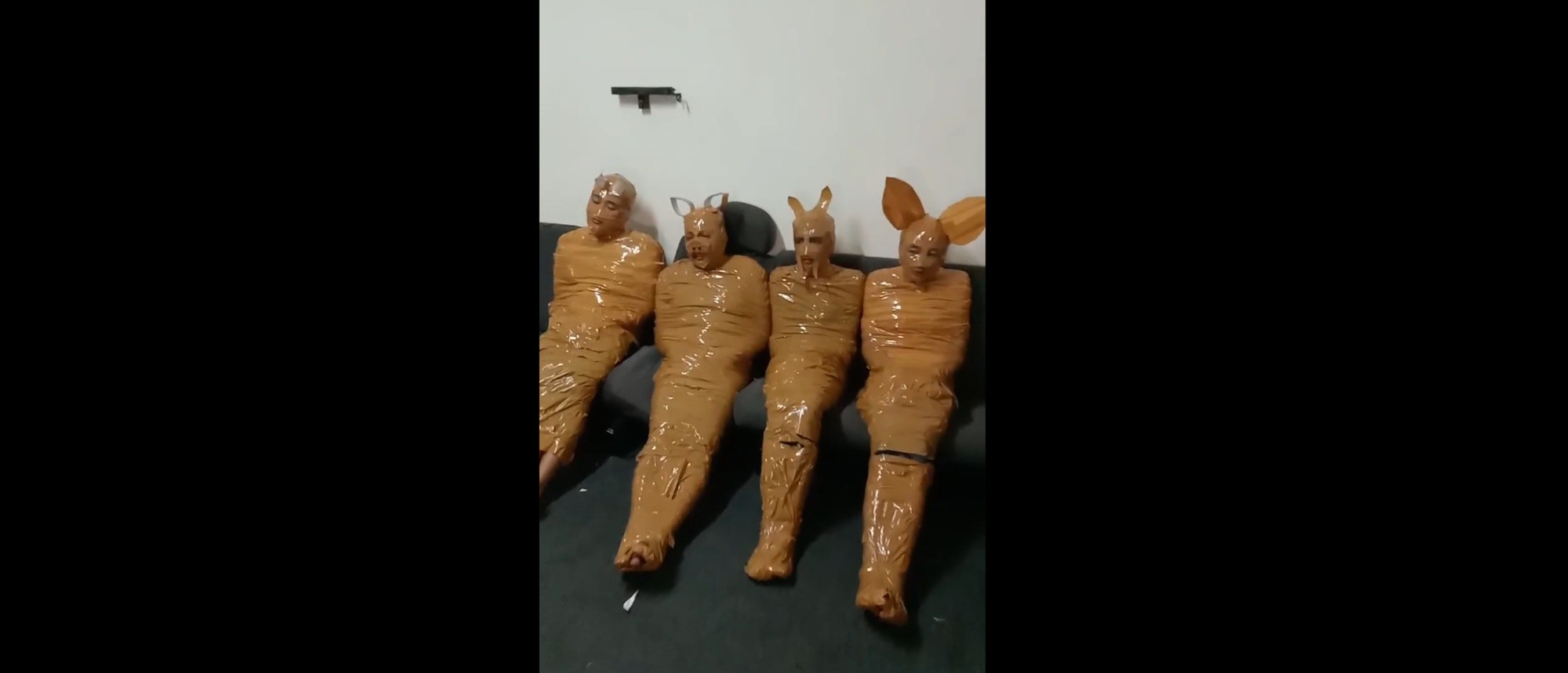
A video circulating on social media, showing four people immobilized with adhesive tape, is being falsely presented as evidence of criminals caught by a vigilante. The footage, approximately 30 seconds long, depicts individuals seated on a sofa, completely wrapped in tape. Various captions accompanying the video claim it shows a vigilante apprehending thieves or residents detaining suspects after a string of robberies. However, fact-checkers have confirmed this is not the case. The individuals in the video are alive and are part of an entertainment content creation group from Indonesia known as Batre TV. This specific clip was extracted from a live stream where they were participating in a challenge. Reverse image searches using tools like InVID, Google Lens, Baidu, and Yandex traced the video's origin to Batre TV's live broadcasts. One of the group members clarified on Instagram that they are content creators performing a challenge and not actual thieves, urging viewers not to spread misinformation. AI detection tools, including Hive Moderation and Google's Synth ID Detector, have analyzed the video and found a low probability of it being AI-generated or synthetically manipulated.
The viral spread of this video highlights the challenges in discerning authentic events from staged content in the digital age. While the video itself is not AI-generated, its misrepresentation as a vigilante act demonstrates how easily real footage can be repurposed to fuel narratives of vigilantism or public disorder. This phenomenon underscores the critical need for robust digital literacy education, enabling individuals to critically evaluate content and verify sources before accepting or sharing information. The ease with which such misleading narratives gain traction points to underlying societal anxieties and a demand for immediate justice, which can be exploited by misinformation campaigns. Future content moderation strategies will need to evolve beyond simple AI detection to encompass contextual analysis and source verification to combat the spread of such 'real-but-misrepresented' media.
AI-generated to prompt reflection — not editorial opinion, not advice, not a statement of fact. How this works.