Viking 1 Achieves Historic Mars Landing on July 20, 1976
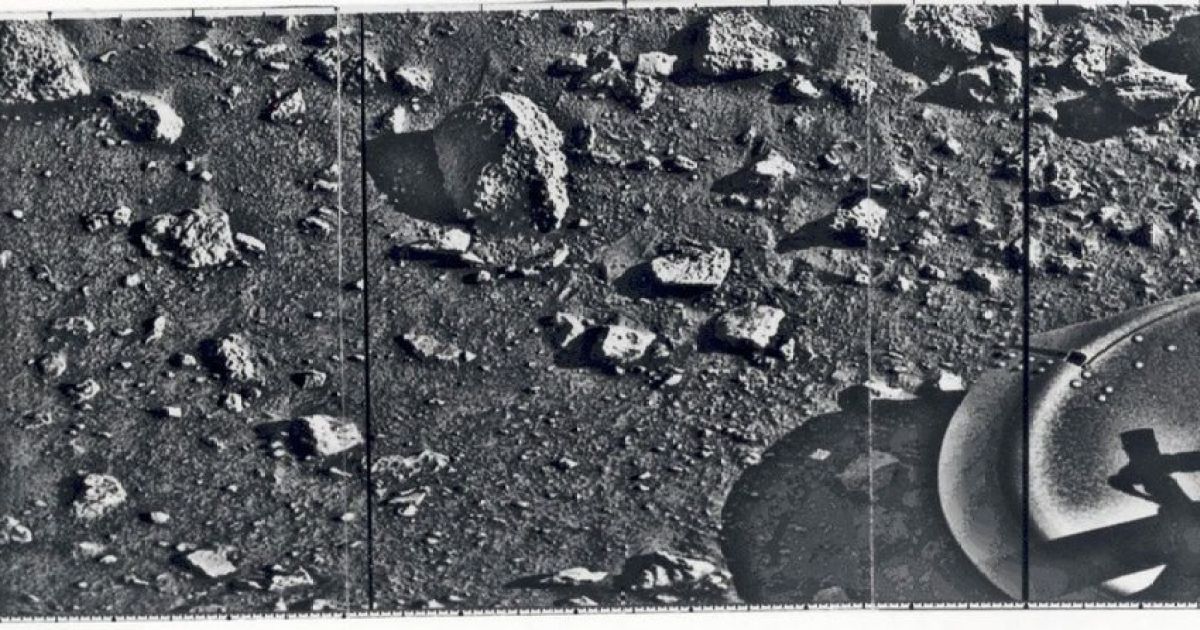
On July 20, 1976, NASA's Viking 1 spacecraft achieved a monumental feat by successfully landing on the surface of Mars. This marked the first time a spacecraft not only landed on the Red Planet but also managed to transmit valuable data back to Earth. While the Soviet Union's Mars 3 lander had reached Mars in 1971, its mission was cut short before any scientific information could be gathered. The Viking program consisted of two identical spacecraft, each designed to function as both an orbiter and a lander. The orbiter component was tasked with a primary mission of mapping the Martian surface from above, providing crucial context for the lander's operations and scientific investigations. This dual-functionality allowed for a comprehensive approach to exploring Mars, combining orbital reconnaissance with direct surface analysis.
The successful landing of Viking 1 on July 20, 1976, represents a pivotal moment in space exploration, demonstrating humanity's growing capability to reach and investigate other celestial bodies. This achievement, following earlier Soviet attempts, underscores the competitive yet collaborative nature of space programs during the Cold War era. The dual orbiter-lander design of the Viking missions was a strategic approach to maximizing scientific return, enabling detailed surface analysis supported by orbital reconnaissance. Looking ahead, such missions laid the groundwork for subsequent, more complex robotic exploration efforts, highlighting the enduring value of robust engineering and scientific planning in pushing the boundaries of our understanding of the solar system and the potential for life beyond Earth.
AI-generated to prompt reflection — not editorial opinion, not advice, not a statement of fact. How this works.