Viking 1 Lander Successfully Touches Down on Mars, Sends First Images
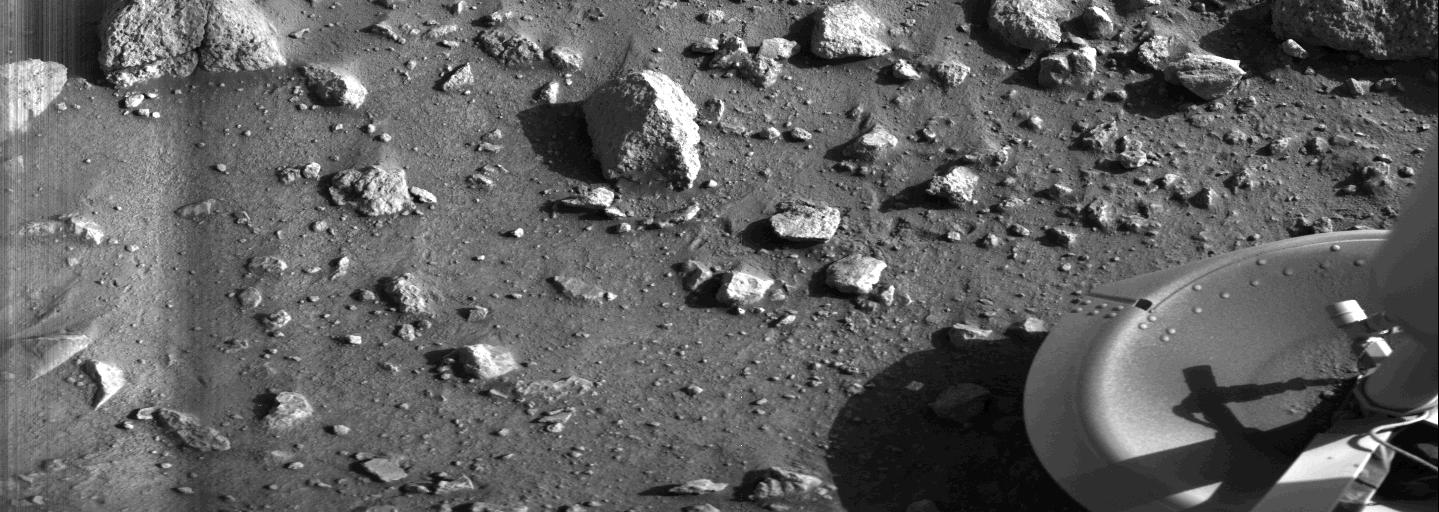
On July 20, 1976, at 5:12 a.m. PDT, NASA's Jet Propulsion Laboratory mission controllers celebrated the successful landing of the Viking 1 lander on the surface of Mars. The lander had navigated the planet's thin atmosphere to achieve a safe touchdown. Approximately forty minutes after landing, the first image transmitted from the Martian surface began to appear on the monitors at JPL, gradually resolving line by line.
The successful landing of Viking 1 marked a significant milestone in space exploration, demonstrating technological capability to reach and operate on another planet. This achievement provided humanity with its first direct visual evidence from the Martian surface, moving beyond telescopic observations. The event underscores the long-term human drive to explore extraterrestrial environments and the complex engineering required for such missions. Future endeavors will build upon this foundational success, seeking to further understand planetary geology, potential habitability, and the broader context of our solar system within the evolving landscape of space science and technology.
AI-generated to prompt reflection — not editorial opinion, not advice, not a statement of fact. How this works.