Village grants boost goat farming, generating 50 million NPR income
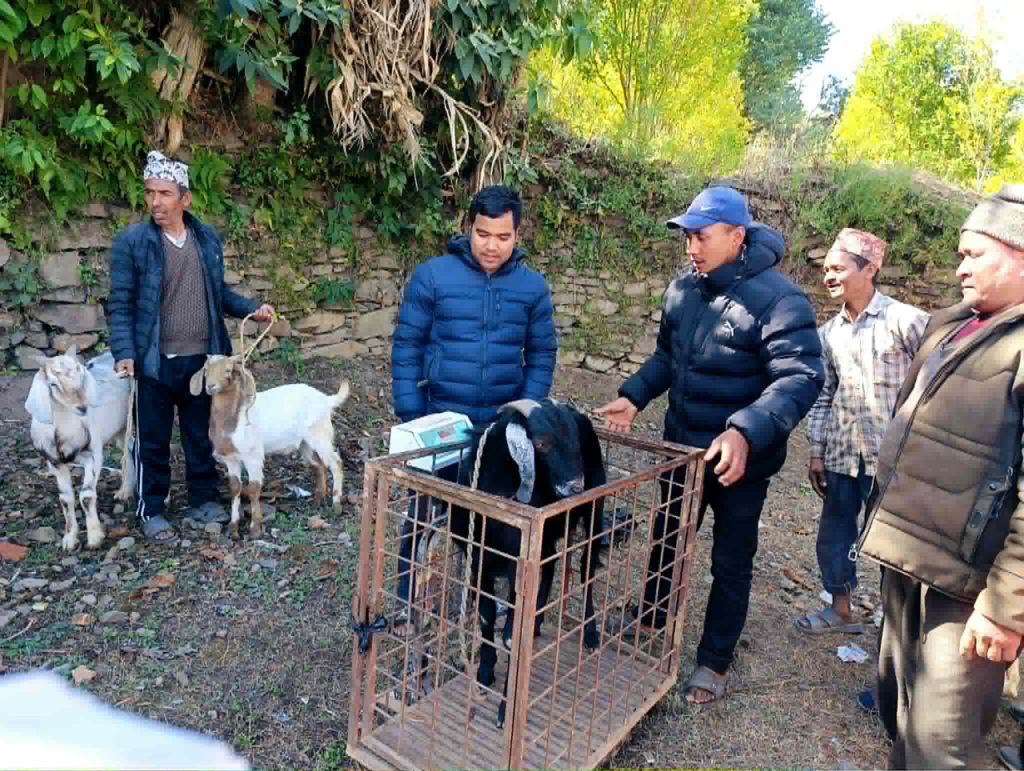
Commercial goat farming is becoming a reliable source of income for farmers in Triveni Rural Municipality, Salyan, Nepal. The practice of selling goats systematically through cooperatives has led to farmers receiving fair prices, significantly increasing production. In the fiscal year 2082/083 alone, farmers in the municipality earned 47,097,586 Nepalese Rupees (approximately 50 million NPR) from the sale of 2,580 goats. This initiative, supported by the rural municipality's grants, has transformed goat farming into a profitable venture. The structured approach to sales ensures that farmers are not exploited and receive the true value for their livestock. The increased income has contributed to the economic development of the region and improved the livelihoods of many farming families. The success of this program highlights the effectiveness of targeted agricultural support and cooperative models in rural economies. Farmers are encouraged to adopt these practices, further boosting the sector's growth.
The success of goat farming in Triveni Rural Municipality, driven by municipal grants and cooperative sales, demonstrates the positive impact of targeted agricultural subsidies and organized market access. This model effectively addresses potential market failures by ensuring farmers receive fair prices, thereby incentivizing increased production and economic self-sufficiency. Looking ahead, the sustainability of this growth will depend on continued support, potential diversification of agricultural products, and the scalability of the cooperative model to other regions. The long-term challenge lies in fostering an environment where such initiatives can thrive independently of direct grants, potentially through enhanced value chain development and market linkages that empower farmers further.
AI-generated to prompt reflection — not editorial opinion, not advice, not a statement of fact. How this works.