Viral Math Problem Divides Internet: Can You Solve √36 + 2 × 3?
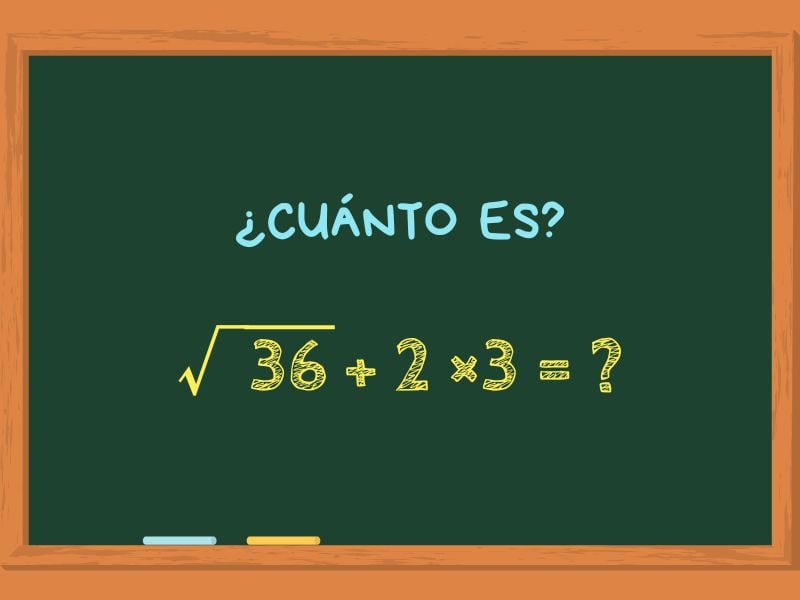
A seemingly simple mathematical equation has resurfaced on social media, sparking debate and dividing users online. The problem, which challenges participants to solve √36 + 2 × 3, is reportedly answered correctly by only 15% of people. The viral post encourages users to attempt the calculation within a 30-second timeframe. This type of mathematical puzzle often tests understanding of the order of operations, a fundamental concept in arithmetic. The widespread difficulty in solving it highlights potential gaps in basic mathematical education or a tendency for people to overlook standard mathematical conventions when faced with online challenges. The equation requires adherence to the standard order of operations (PEMDAS/BODMAS), where roots and multiplication are performed before addition.
This viral math problem, while seemingly trivial, illustrates a common societal phenomenon where basic principles are overlooked under pressure or in informal settings. The widespread inability to solve it accurately suggests a potential disconnect between formal mathematical education and its practical application or retention in everyday life. The challenge's popularity indicates a public interest in cognitive puzzles, but also raises questions about how readily accessible knowledge can be obscured by common misconceptions or a lack of attention to detail. Future educational approaches might benefit from emphasizing the consistent application of foundational rules, particularly in contexts where quick, informal problem-solving is encouraged.
AI-generated to prompt reflection — not editorial opinion, not advice, not a statement of fact. How this works.