Viruses Confirmed as Potential Triggers for Parkinson's Disease by Researchers
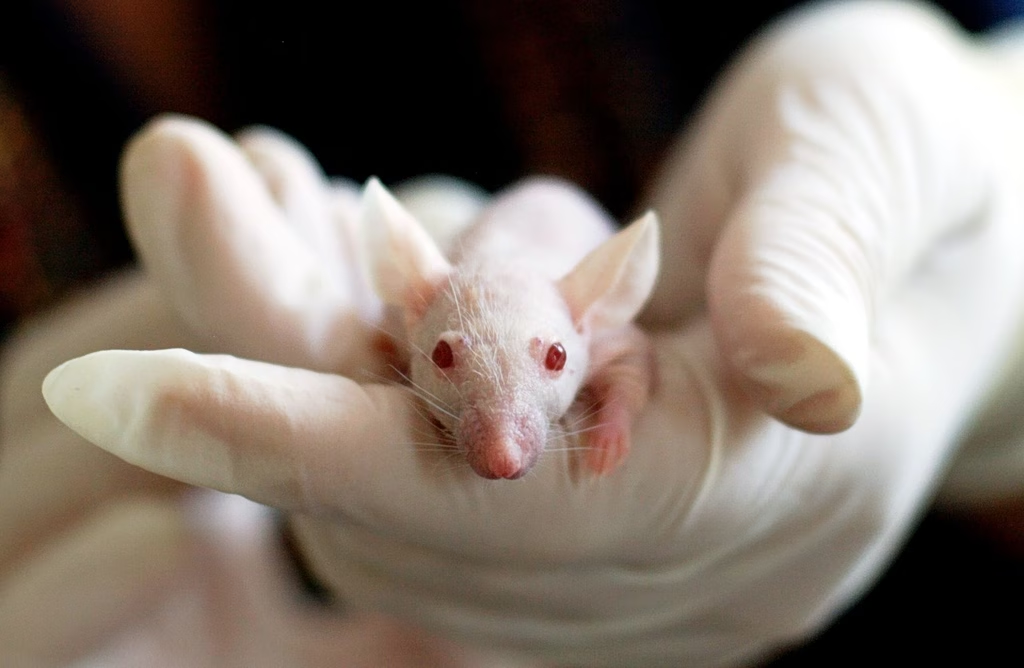
Researchers at Texas A&M University have announced a breakthrough in understanding Parkinson's disease, utilizing a novel method involving a virus. Their study, published in the journal Brain, Behavior & Immunity – Health, successfully replicated the characteristic brain damage seen in Parkinson's patients. Crucially, this was achieved without resorting to synthetic neurotoxins, which have been used in previous research. This new approach offers a more biologically relevant model for studying the disease's progression and potential causes. The findings lend significant weight to the hypothesis that viral infections may play a role in initiating Parkinson's disease. This research opens new avenues for developing diagnostic tools and therapeutic strategies targeting the early stages of the neurodegenerative disorder. Further investigation into specific viral mechanisms and their interaction with neural pathways is anticipated.
This research advances the scientific understanding of Parkinson's disease by providing a viral-induced model that mimics human pathology without synthetic agents. The findings support the growing body of evidence suggesting infectious agents may be environmental triggers for neurodegenerative conditions. From a public health perspective, this highlights the importance of understanding the long-term neurological consequences of viral infections and may necessitate a re-evaluation of preventative measures. The study's methodology, by avoiding artificial toxins, offers a more ecologically valid pathway for future drug development and therapeutic interventions aimed at mitigating or reversing disease progression. Future research could explore the specific viral strains implicated and the host immune responses that contribute to neuroinflammation and neuronal loss, potentially revealing novel targets for intervention within the next decade.
AI-generated to prompt reflection — not editorial opinion, not advice, not a statement of fact. How this works.