Volunteers Rescue Fish from Drying Peel Canal Amidst Drought
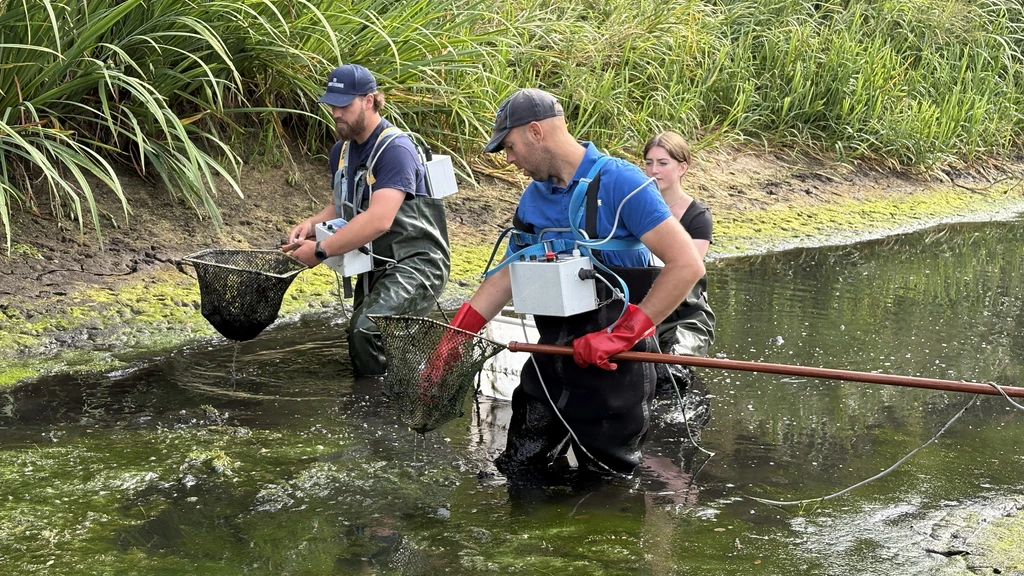
Sport fishermen and other volunteers are actively rescuing fish from the drying Peel Canal near Westerbeek, in the Netherlands. Using scoop nets, they are carefully transferring the aquatic life to a nearby canal that still has sufficient water levels. Ramon Pasmans of the Sportvisunie emphasized the goal: "No fish in the mud, but a fish in the water." The Peel Canal, historically known as the Defensiekanaal, straddles the border of Brabant and Limburg. Originally constructed before World War II to thwart tank invasions, it has now been reduced to a mere stream due to persistent drought.
A concerned angler alerted the water board this week about the perilous situation for the canal's inhabitants. Pasmans, with local volunteer assistance, initiated the rescue operation yesterday, wading through mud to net as many fish and other creatures as possible. The catch includes various species, from small fish to a large carp. Rescued fish are placed in a water tank with added oxygen before being transported to the Kanaal van Deurne, several kilometers away. Jorg Nelissen of the Sportvisunie highlighted the urgency, noting the canal's water levels have dropped significantly and it is on the verge of drying up completely.
Nelissen stated that such rescue efforts are becoming more frequent due to climate change, which exacerbates dry periods. He stressed the importance of catch-and-release initiatives to preserve aquatic biodiversity for the future. This situation mirrors efforts elsewhere in North Brabant, where measures are being taken to save fish, including pumping groundwater near Schijndel to protect the endangered great loach, a species known for its resilience to temporary water drying.
The current situation with the Peel Canal highlights the increasing strain on freshwater ecosystems due to prolonged drought, a trend exacerbated by changing climate patterns. The volunteer-led rescue efforts demonstrate community resilience and a direct response to environmental degradation. However, these actions represent a reactive measure rather than a systemic solution. Looking ahead, the recurring need for such interventions underscores the critical importance of integrated water management strategies that account for future climate scenarios, including water retention infrastructure and sustainable land use practices. Preserving biodiversity in these altered conditions will require proactive, long-term planning that addresses the root causes of water scarcity and habitat loss, moving beyond emergency responses to ensure ecological stability.
AI-generated to prompt reflection — not editorial opinion, not advice, not a statement of fact. How this works.