WAIC 2026: AI Shifts from Tech Demos to Real-World Value and Partnerships
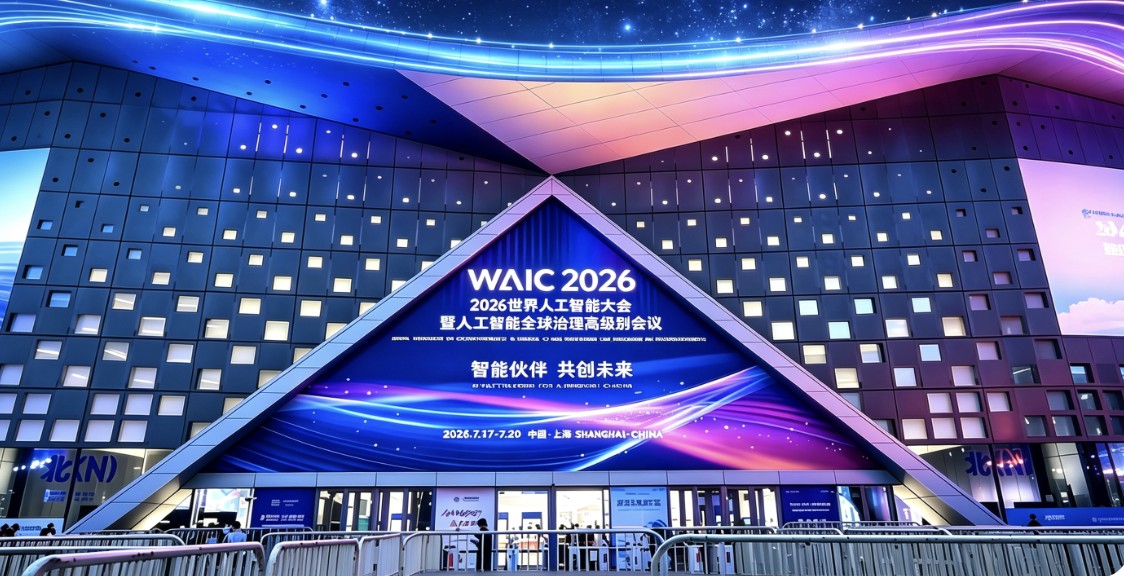
The 2026 World Artificial Intelligence Conference (WAIC) in Shanghai, held from July 17-20, marked a significant shift in the AI industry's focus. This year's theme, "Intelligent Partner, Co-create the Future," emphasized the transition from technical demonstrations to practical applications, system delivery, and commercial value. For the third consecutive year, 36Kr's "Kr Talk Future" initiative explored the conference, observing AI's evolution from model competition to application trials. Previously, industry buzz was driven by parameters, leaderboards, and demos; now, companies are prioritizing how AI integrates into business processes, collaborates with humans, and delivers sustained value in real-world scenarios. AI is no longer just a model generating answers but is becoming a system capable of understanding objectives, mobilizing resources, perceiving environments, and delivering results across domains like computing power, embodied intelligence, industry agents, and consumer AI hardware. The conference highlighted AI's potential as a deliverable, reusable, and commercially valuable intelligent partner. Key developments included the launch of Domi, a headhunter industry agent by Hawa Platform, designed to streamline recruitment workflows through AI. Hawa CEO He Hongkai emphasized that AI augments, rather than replaces, human recruiters, allowing them to focus on high-value tasks. Domi utilizes a proprietary large model and matching engine to automate tasks like resume screening and candidate communication, facilitating collaboration among different AI agents. The conference also featured extensive on-site explorations of embodied intelligence and application ecosystems. Companies like Qiongche Intelligence showcased robots moving beyond demonstrations to become reliable service partners in pharmacies and hotels, emphasizing a closed-loop system of data collection, model training, and commercial deployment. Huayan Robotics introduced a modular embodied neural system to simplify AI application development, extending its reach to commercial scenarios beyond industrial applications. In the application and ecosystem hall, Yixin Group presented an AI agent for auto finance that drastically reduces processing times, while Om AI demonstrated its VLX multimodal model series for real-time video analysis on terminal devices, enabling autonomous drone operations. PPIO showcased its intelligent token factory and AI agent infrastructure, offering solutions for model selection, cost control, and stability. Virtual human technology was also prominent, with Shifang Jing Sheng presenting a lifelike virtual version of Teresa Teng, developed with support from James Cameron's Digital Domain. Chinese AI chip company Qingwei Intelligence debuted its REX81 Supernode system, highlighting its advancements in computing power and software stack for various industries, including space and mineral exploration. Alibaba Cloud presented its full-stack AI solutions, covering computing power, industry models, enterprise agents, and digital tools, aiming to provide comprehensive AI transformation for businesses. The event also featured short videos from companies like Soul, Qualcomm, and Kaiview Data, exploring AI's impact on social interaction, terminal chips, data infrastructure, and robotics. These presentations collectively illustrated AI's growing role as a collaborative partner across diverse sectors.
The WAIC 2026 signifies a maturing AI landscape, moving beyond theoretical capabilities to demonstrate tangible economic and operational value. The industry's pivot towards "intelligent partners" and "system delivery" reflects a pragmatic response to market demands for AI solutions that integrate seamlessly into existing workflows and generate measurable business outcomes. This evolution suggests a strategic understanding that AI's true potential lies not in isolated technological prowess, but in its capacity to augment human expertise and drive efficiency within specific industry contexts. The emphasis on vertical AI agents and embodied intelligence in real-world scenarios indicates a focus on solving complex, domain-specific problems, moving away from generalized AI applications. This trend is likely to accelerate the development of specialized AI tools that require deep industry knowledge and robust data pipelines. As AI infrastructure, including specialized chips and efficient data management, becomes more sophisticated, the focus will increasingly be on the synergistic interplay between hardware, software, and application layers. The long-term challenge will be to ensure that this integration fosters sustainable growth and equitable access to AI's benefits, while navigating the inherent complexities of data privacy, algorithmic bias, and workforce adaptation in an increasingly automated future.
AI-generated to prompt reflection — not editorial opinion, not advice, not a statement of fact. How this works.