Waterlogging in Abhaynagar: Over 200 Families Stranded for 1.5 Months
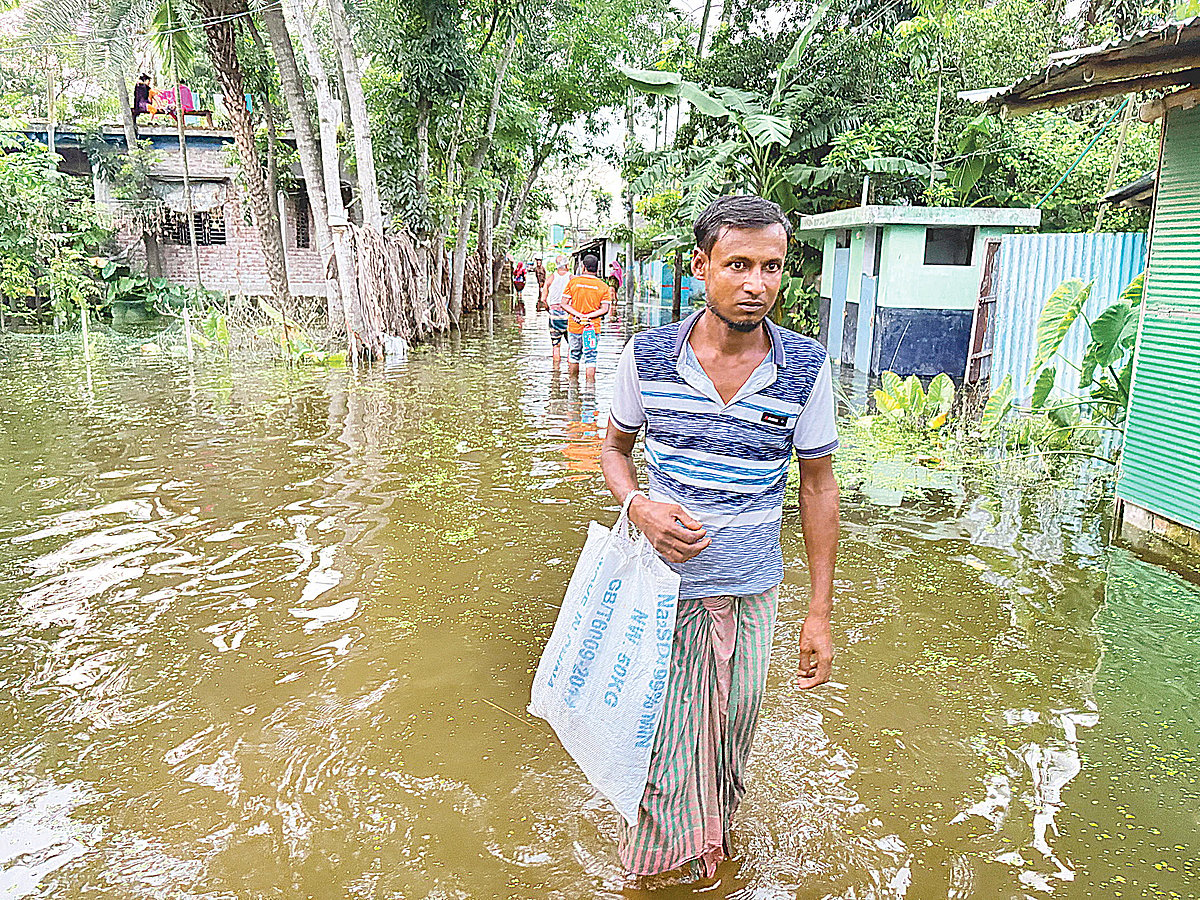
Over two hundred families in Abhaynagar, Bangladesh, have been living in waterlogged conditions for the past month and a half due to the filling of a local bill (wetland). The residents are facing severe difficulties as a result of the prolonged inundation. Farmers and residents have expressed their frustration with the lack of action to drain the accumulated water. There is a threat of further action if the situation is not resolved soon. Specifically, farmer Kamrul Huda from Chengutia village stated that if measures are not taken promptly to remove the water, they will resort to blocking the Jessore-Khulna highway again. This indicates a growing desperation among the affected population to seek a resolution to their plight.
The prolonged waterlogging affecting over 200 families highlights a potential conflict between land development activities and environmental sustainability. The filling of wetlands, while potentially aimed at land reclamation for development, can disrupt natural drainage systems, leading to severe flooding and displacement. The threat to block the Jessore-Khulna highway indicates that the affected community feels their grievances are not being adequately addressed by local authorities or developers. Future urban planning and infrastructure projects must incorporate robust environmental impact assessments and sustainable drainage solutions to prevent such recurrent crises. Balancing economic development with ecological preservation is crucial for long-term community well-being and resilience.
AI-generated to prompt reflection — not editorial opinion, not advice, not a statement of fact. How this works.