Wayanad Landslide: A 'Gray Rhino' Event Fueled by Unchecked Development
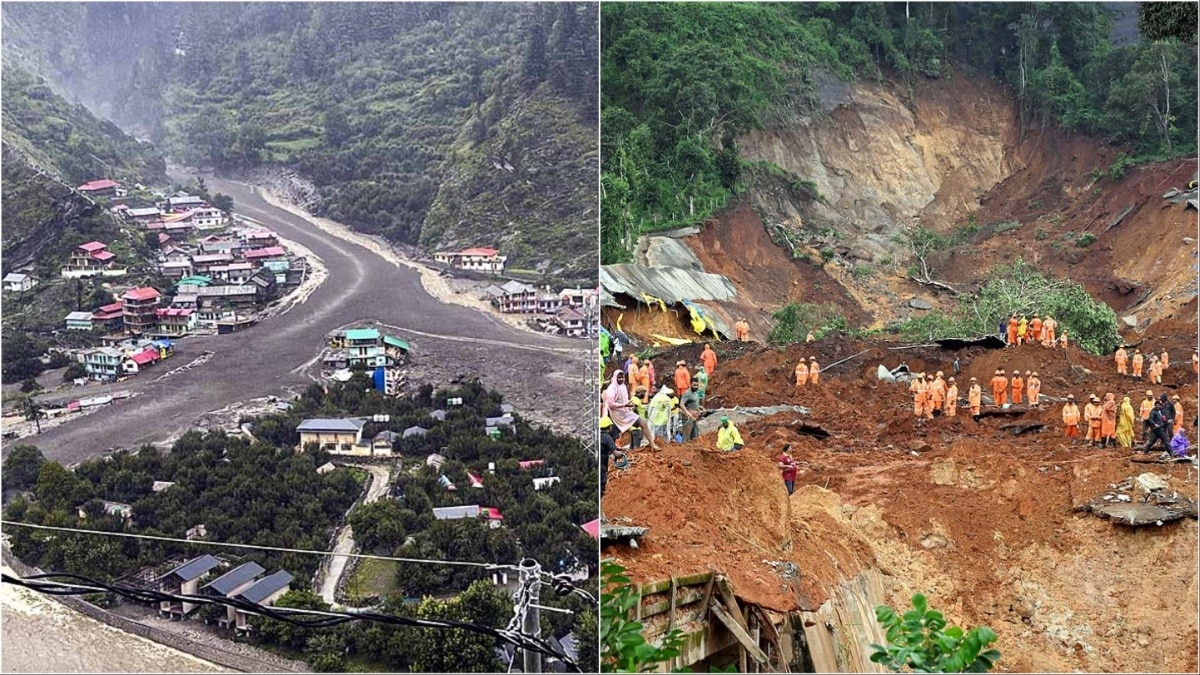
A severe landslide occurred at the Kalladi tunnel project in Wayanad, India, following 265 mm of heavy rainfall. This event has been termed a 'Gray Rhino' landslide, signifying a predictable disaster that arises from ecologically sensitive areas experiencing unchecked construction, deforestation, and unscientific dumping of debris. The incident highlights a disregard for established regulations amidst the accumulation of disaster-causing factors. The landslide has buried all rules and regulations under its debris, suggesting a systemic failure to adhere to environmental and safety protocols. This disaster serves as a stark warning about the consequences of unsustainable development practices in fragile ecosystems. The heavy rainfall acted as a trigger, but the underlying causes are rooted in human activities that have compromised the region's natural stability. The scale of the destruction underscores the urgent need for stricter environmental governance and responsible land-use planning in ecologically sensitive zones like Wayanad.
The 'Gray Rhino' designation for the Wayanad landslide suggests a predictable crisis stemming from the intersection of ecological sensitivity and aggressive development. This event appears to be a consequence of prioritizing infrastructure projects and resource extraction over environmental safeguards, leading to the accumulation of risks. The unscientific dumping of debris and deforestation, coupled with significant rainfall, created a scenario where a major disaster was highly probable. This situation prompts reflection on governance structures that permit such development in ecologically fragile zones, and the enforcement mechanisms for environmental regulations. Moving forward, a critical evaluation of development incentives and land-use policies is necessary to prevent similar predictable yet unaddressed crises, ensuring that future infrastructure projects are integrated with robust environmental impact assessments and sustainable practices, especially in the face of a changing climate.
AI-generated to prompt reflection — not editorial opinion, not advice, not a statement of fact. How this works.