Weather report mistakenly shows 100°C in Warsaw
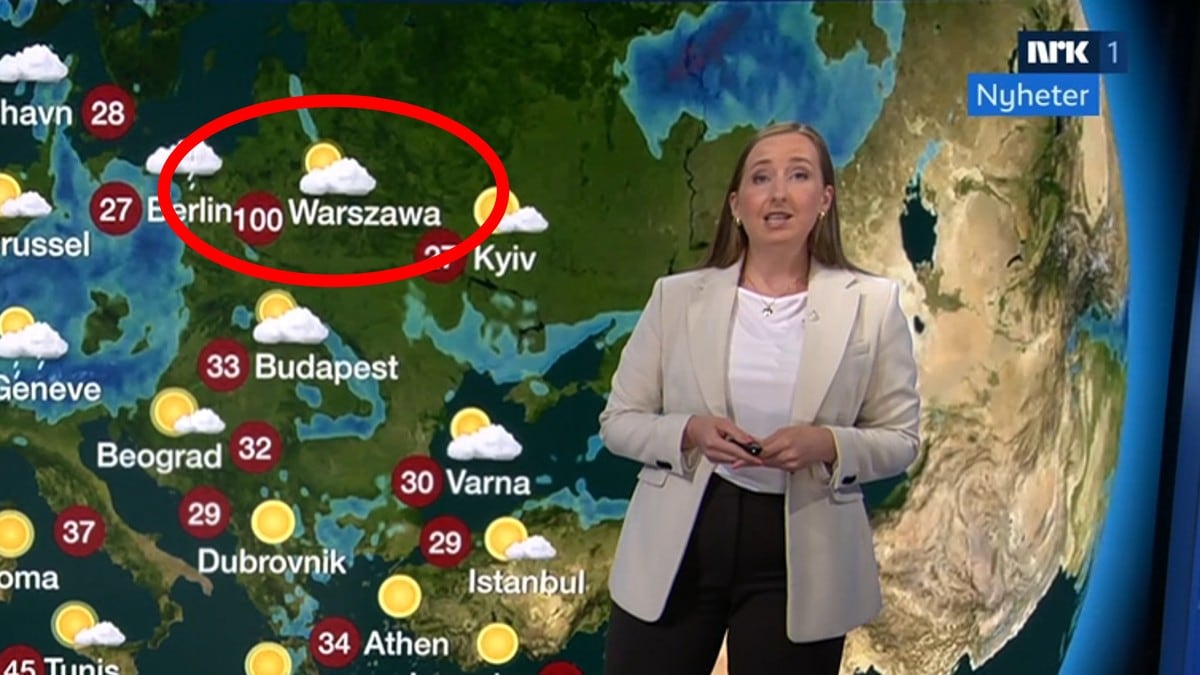
During Norway's NRK weather forecast on Thursday evening, a graphic incorrectly displayed the temperature in Warsaw, Poland, as 100 degrees Celsius. The actual temperature in the Polish capital was 30 degrees Celsius. Lead meteorologist Pernille Borander attributed the error to a combination of technical and human mistakes. She humorously remarked that "things got a bit heated" at the start of her shift, but assured viewers that Warsaw could relax as the temperature was a much more manageable 30 degrees. Borander lightheartedly suggested that if it were truly 100 degrees, one could brew coffee by simply placing a cup outside or fry eggs on a car.
This incident highlights the critical importance of robust quality control mechanisms in broadcast media, particularly for data-driven content like weather forecasts. The juxtaposition of an extreme, impossible temperature with a plausible one underscores the potential for public confusion and distrust when technological systems fail or human oversight is inadequate. While presented humorously, such errors can erode confidence in information sources. Future systems might benefit from automated anomaly detection that flags improbable data points before they are broadcast, alongside enhanced human verification protocols to ensure accuracy and maintain audience credibility in an era increasingly reliant on data visualization.
AI-generated to prompt reflection — not editorial opinion, not advice, not a statement of fact. How this works.