Weave Robotics' Isaac 1 Home Robot Ditches Legs and Fingers for Simplicity
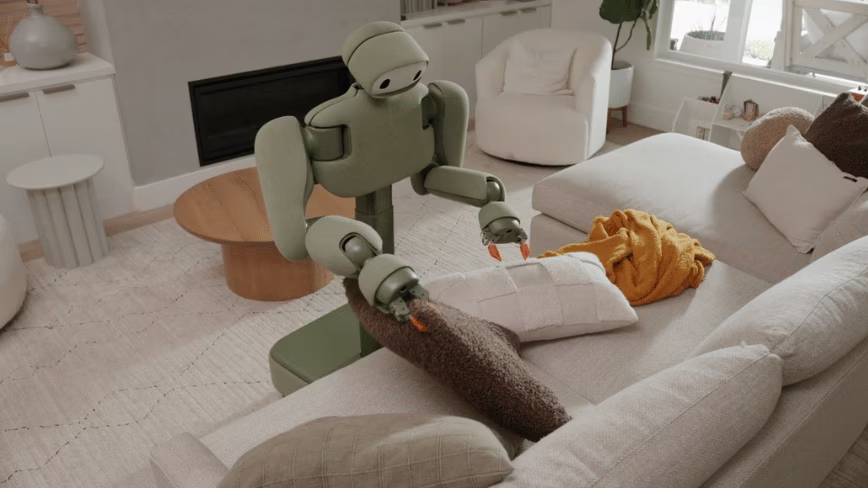
Weave Robotics, a startup backed by Y Combinator, has introduced its new home robot, the Isaac 1, aiming to simplify domestic assistance. Unlike many envisioned humanoid robots that have remained elusive for decades, the Isaac 1 is designed with a more practical approach. It does not possess legs for walking or articulated fingers for complex manipulation. Instead, its primary function focuses on tasks like doing laundry, suggesting a more specialized utility. This design philosophy also allows for a significantly lower price point compared to its more sophisticated, leg-equipped counterparts. The company believes that by lowering expectations and focusing on achievable functionalities, they can bring useful robotic assistance into homes more effectively. The Isaac 1 represents a departure from the ambitious, often over-promised, concept of a fully capable robot butler.
The introduction of the Isaac 1 by Weave Robotics highlights a strategic pivot in the home robotics market, moving away from complex, high-cost humanoid designs towards more specialized, affordable solutions. This approach acknowledges the significant engineering challenges and market adoption hurdles associated with fully ambulatory and dexterous robots. By focusing on specific, high-frequency tasks like laundry, the Isaac 1 aims to deliver immediate practical value, potentially creating a viable niche. This strategy could influence future development by emphasizing modularity and task-specific functionalities over general-purpose anthropomorphism, aligning with the economic realities and user needs of the near-term AI era. The success of such a model will depend on its ability to reliably perform its designated tasks and integrate seamlessly into household routines, demonstrating a pragmatic path toward broader robotic integration.
AI-generated to prompt reflection — not editorial opinion, not advice, not a statement of fact. How this works.