Weaver Birds Build Nests on Silk Cotton Tree Branches in Moulvibazar
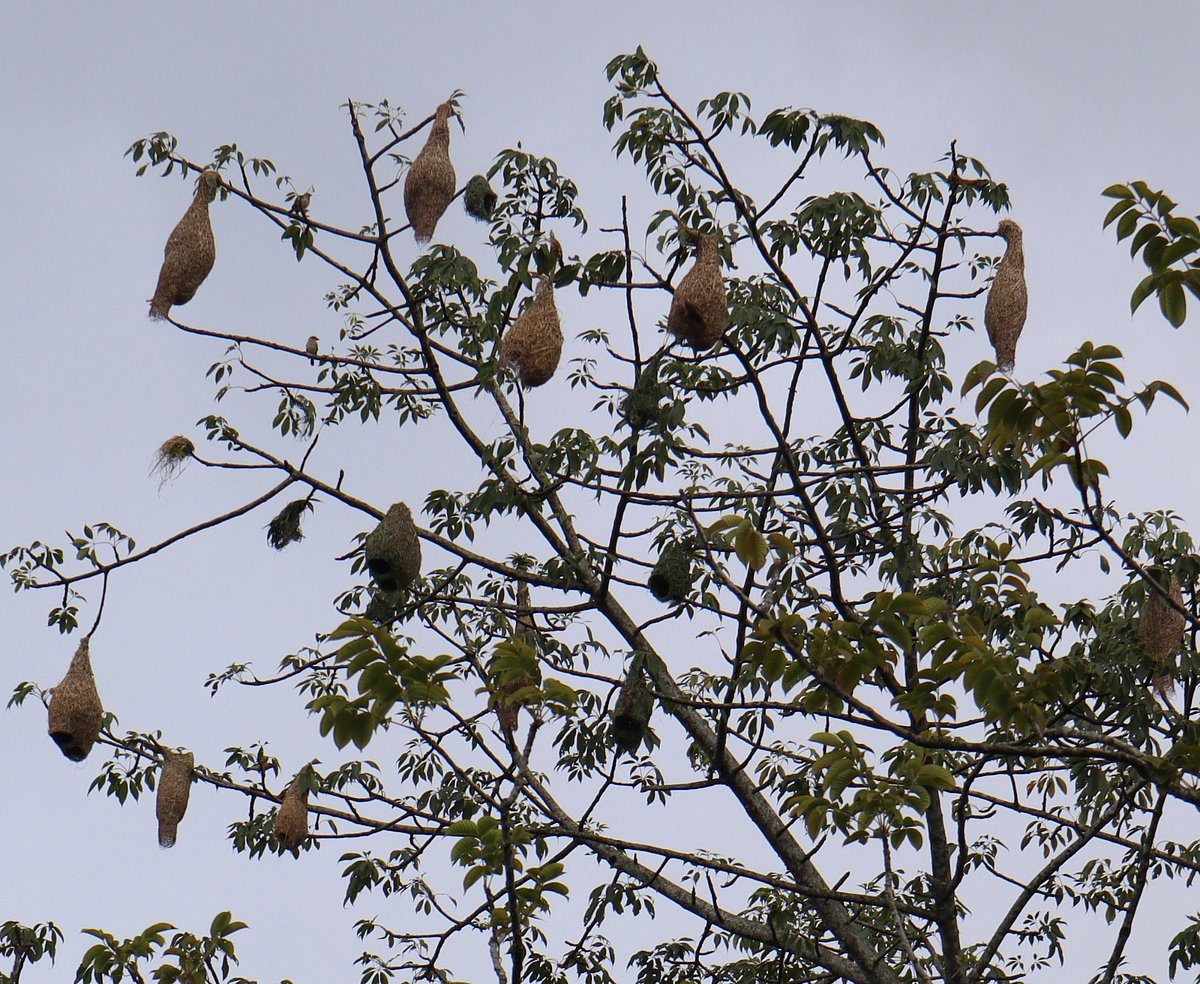
A silk cotton tree in Azmeru, Moulvibazar Sadar Upazila, has become a haven for weaver birds, with numerous nests adorning its branches. Located near a home and the Bird Park & Eco Village, the tree's sparse foliage reveals the intricate nests, some old and gray, but most appearing fresh and green. The area, characterized by rice paddies and lush greenery, provides a picturesque setting for the birds' construction activities. Weaver birds are observed diligently collecting thin fibers with their beaks and weaving them into their nests, showcasing remarkable architectural skills.
The nests themselves are engineering marvels, featuring ventilation, secure entrances, and separate compartments for eggs. To maintain balance during strong winds, the birds add weight to the bottom of the nests using mud or cow dung, earning them the nickname 'architect birds.' Zahid Ahmed Chowdhury, Managing Director of Bird Park & Eco Village, noted the decline of weaver bird nests in rural areas but highlighted the significant presence in this locality, enhancing the area's natural appeal.
Weaver birds construct their nests during the summer breeding season, with males gathering materials like palm, date, or grass leaves. A female bird inspects the partially built nest, choosing a mate based on the quality of the weaving. Building a single nest takes 7 to 10 days. The female typically lays three eggs, and while incubating, the male begins constructing another nest. Chicks hatch in 10 to 13 days and learn to fly within 15 to 19 days, after which the parents feed them insects and teach them to forage for grains.
The proliferation of weaver bird nests on a single silk cotton tree, as observed in Moulvibazar, highlights the critical role of specific microhabitats in supporting biodiversity, especially in areas undergoing agricultural or developmental changes. The weaver bird's sophisticated nest-building techniques, including structural adaptations for weather resistance and internal partitioning, demonstrate advanced avian engineering. This natural phenomenon underscores the importance of preserving natural elements like mature trees and surrounding vegetation, which provide essential resources and nesting sites. As urbanization and agricultural practices evolve, understanding and protecting these ecological niches becomes paramount for maintaining avian populations and the broader ecosystem's health. The symbiotic relationship between the birds and their environment, particularly their ability to adapt construction to environmental conditions, offers insights into resilience and sustainable design principles applicable beyond the natural world.
AI-generated to prompt reflection — not editorial opinion, not advice, not a statement of fact. How this works.
