Webb Telescope Captures Detailed View of Starburst Galaxy Centaurus A
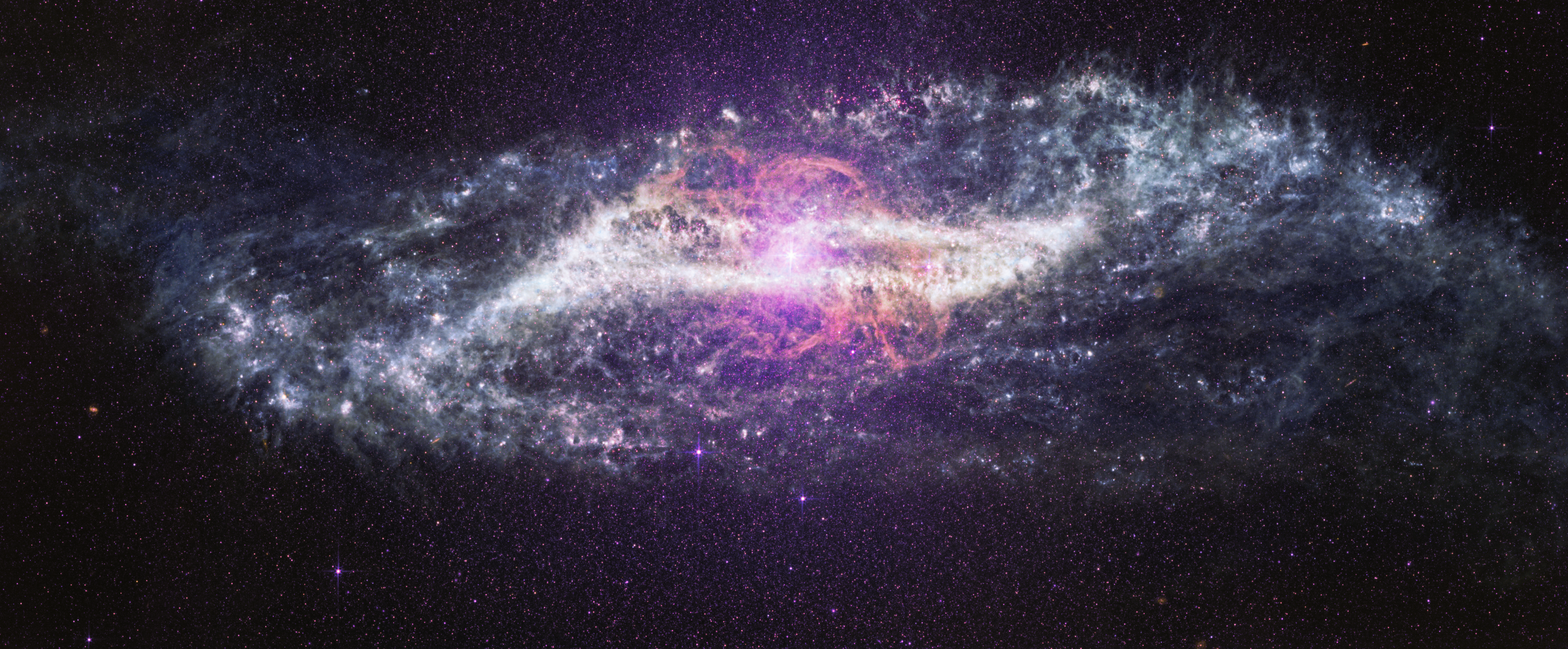
NASA's James Webb Space Telescope, using its Mid-Infrared Instrument (MIRI), has captured a detailed image of the nearby galaxy Centaurus A, as revealed on July 6, 2026. This observation highlights the galaxy's dusty structures and underlying activity, which are key to understanding its unusual nature. Centaurus A is situated 11 million light-years from Earth, making it a relatively close cosmic neighbor. However, it stands apart from most adjacent galaxies due to its significant activity.
The James Webb Space Telescope's MIRI instrument provides unprecedented mid-infrared views, enabling detailed study of galactic structures and processes like star formation. Centaurus A's proximity and active nature make it a prime target for understanding galaxy evolution and the impact of active galactic nuclei on their surroundings. Future observations will likely focus on dissecting the complex interplay between dust, gas, and stellar populations within such systems, offering insights into the mechanisms that drive galactic change over cosmic timescales.
AI-generated to prompt reflection — not editorial opinion, not advice, not a statement of fact. How this works.