Webb Telescope Captures Extreme Exoplanet's Two Distinct Faces
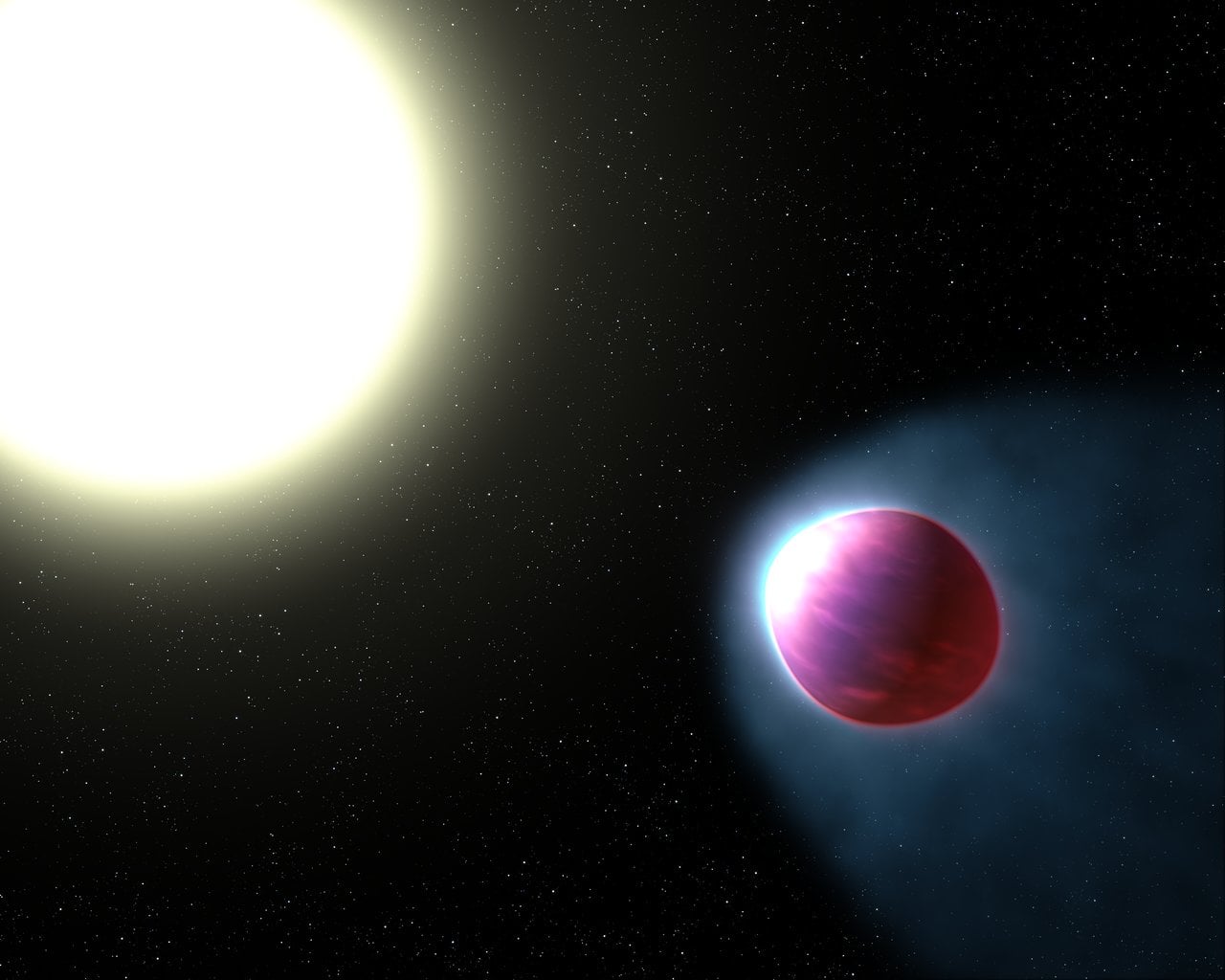
Astronomers have utilized the James Webb Space Telescope to observe an exoplanet exhibiting two vastly different hemispheres simultaneously. This extreme, tidally locked planet presents one side battered by fierce winds and another that is comparatively calmer. The observation reveals a planet with a robust weather system capable of dissociating water molecules. This finding also suggests that current scientific models for alien atmospheres may be missing a crucial component. The exoplanet's unique characteristics offer new insights into the complex atmospheric dynamics of worlds beyond our solar system. Further study of this celestial body promises to refine our understanding of planetary formation and atmospheric evolution.
The James Webb Space Telescope's observation of this tidally locked exoplanet highlights the limitations of current atmospheric models for alien worlds. The discovery of a weather system so extreme that it can break apart water molecules underscores the need for more sophisticated simulations that account for such powerful forces. This finding prompts a re-evaluation of how we predict planetary habitability and atmospheric composition, suggesting that our understanding of exoplanet diversity is still in its early stages. Future research will likely focus on incorporating these extreme conditions into models, potentially revealing a broader range of atmospheric phenomena and planetary types than previously considered.
AI-generated to prompt reflection — not editorial opinion, not advice, not a statement of fact. How this works.