Webb Telescope Detects Giant Planet Hidden in Beta Pictoris System
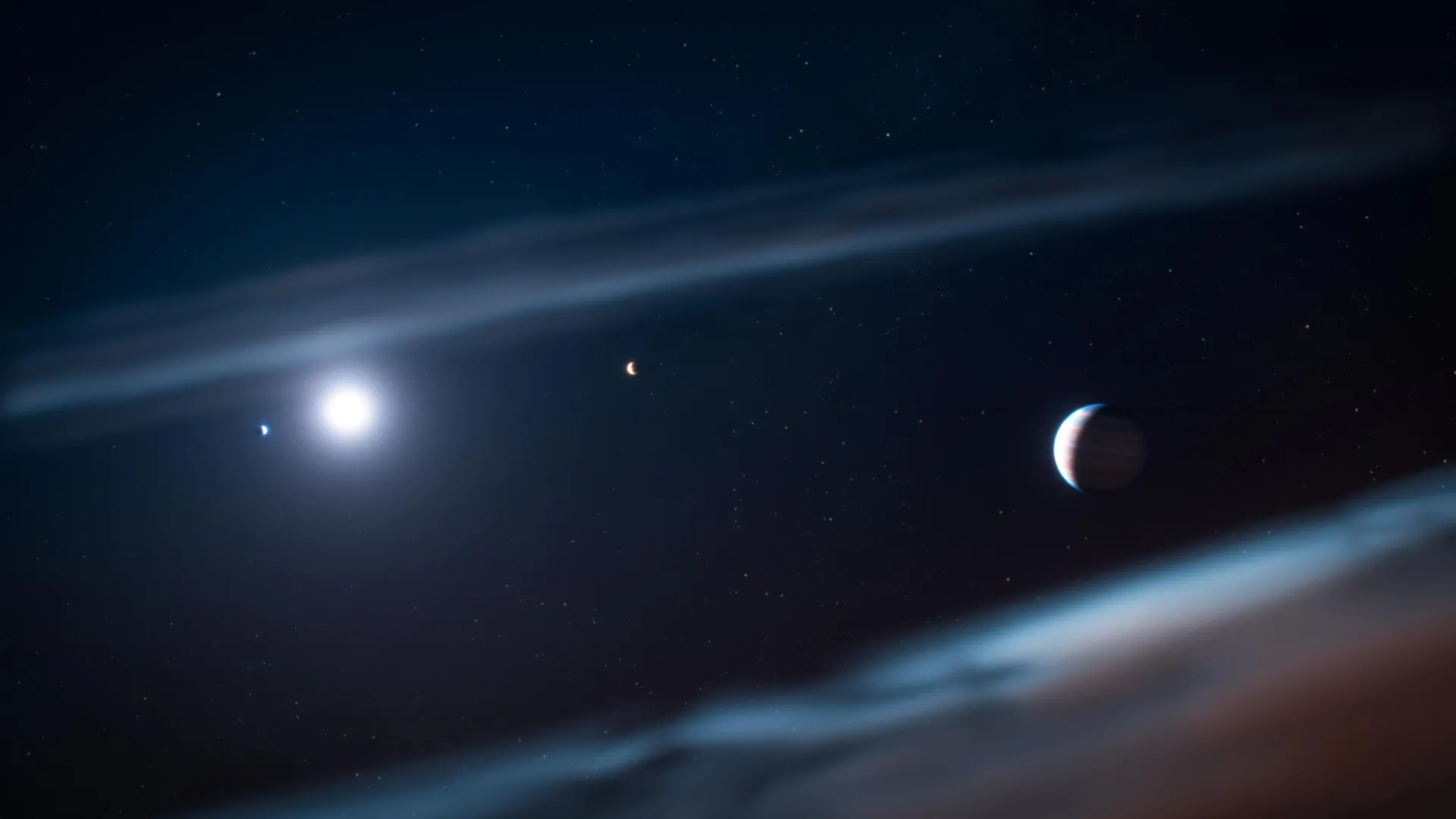
NASA's James Webb Space Telescope has discovered a giant planet, named Beta Pictoris d, that had been concealed within one of astronomy's most extensively studied planetary systems. The planet was hidden from view by a bright disk of cosmic dust surrounding its host star. Webb's advanced instruments were able to detect Beta Pictoris d by identifying atmospheric signatures of carbon monoxide, water vapor, and methane. This discovery highlights a novel and effective technique for identifying exoplanets that are difficult to observe. The Beta Pictoris system, located approximately 63 light-years away, is known to host other planets, making this a significant find for understanding planetary formation and evolution.
The detection of Beta Pictoris d by the Webb telescope demonstrates the increasing power of advanced observational tools to penetrate cosmic dust and reveal previously hidden celestial bodies. This finding underscores the potential for new discoveries even within well-known astronomical systems, suggesting that our understanding of planetary architectures may be incomplete. The utilization of atmospheric composition as a detection method opens avenues for identifying exoplanets that might otherwise remain elusive. This advancement could significantly accelerate the pace of exoplanet cataloging and the study of planetary diversity, offering crucial data points for theories of planet formation and habitability in the coming decade.
AI-generated to prompt reflection — not editorial opinion, not advice, not a statement of fact. How this works.