Webb Telescope Reveals How Supermassive Black Holes Consume Matter
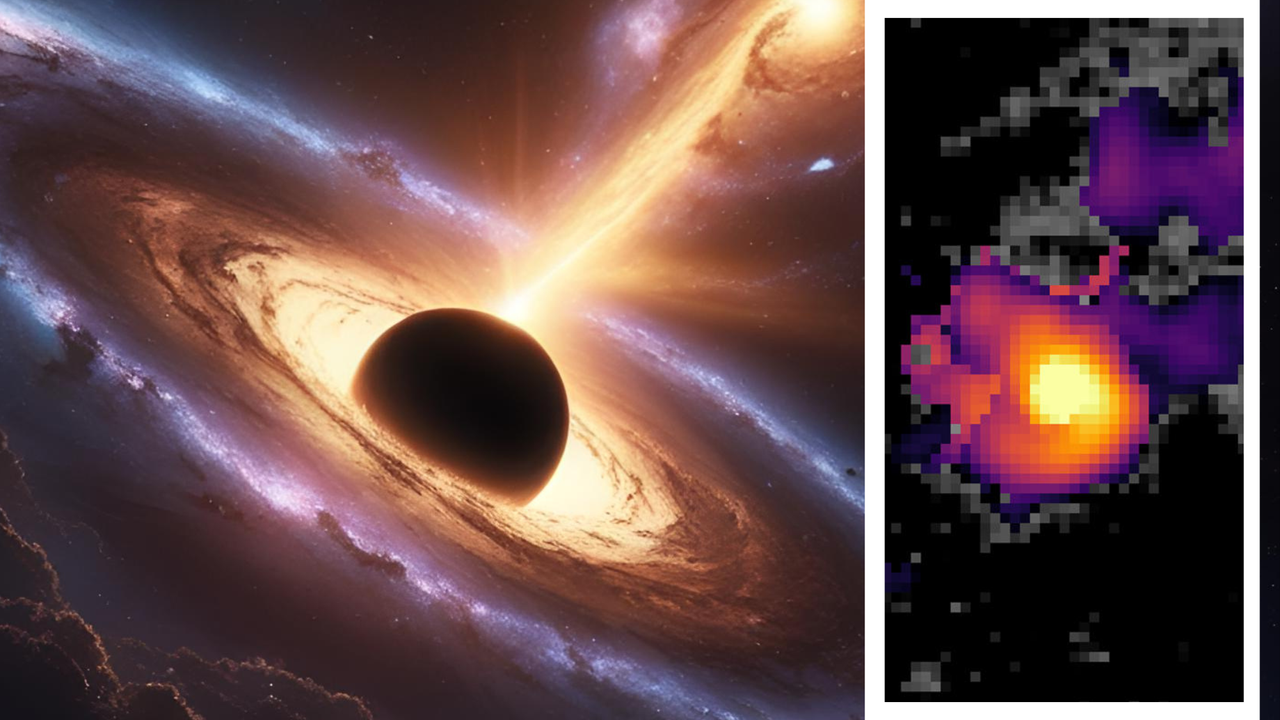
Astronomers have utilized the James Webb Space Telescope (JWST) to observe the processes by which supermassive black holes acquire matter. These observations provide unprecedented insight into the feeding mechanisms of these cosmic giants. The JWST's advanced capabilities allow for detailed study of the environments surrounding black holes, shedding light on how material is drawn in and accreted. This research aims to answer fundamental questions about black hole growth and evolution within galaxies. Understanding these feeding habits is crucial for comprehending the co-evolution of black holes and their host galaxies. The data gathered is expected to refine theoretical models of black hole accretion and activity. Further analysis will explore the role of these feeding processes in shaping galactic structures and star formation. The findings mark a significant step forward in astrophysics.
The James Webb Space Telescope's observations offer a scientific lens on the complex accretion processes of supermassive black holes. By providing empirical data on how these objects consume matter, the JWST facilitates a more objective understanding of their role in galactic evolution. This empirical approach moves beyond theoretical speculation, allowing for the refinement of astrophysical models. Future research may explore how variations in feeding mechanisms correlate with different galactic environments and evolutionary stages, potentially revealing systemic patterns in cosmic structure formation over the next decade.
AI-generated to prompt reflection — not editorial opinion, not advice, not a statement of fact. How this works.