Webb Telescope's 'Little Red Dots' May Hide Black Holes Emitting Cosmic Neutrinos
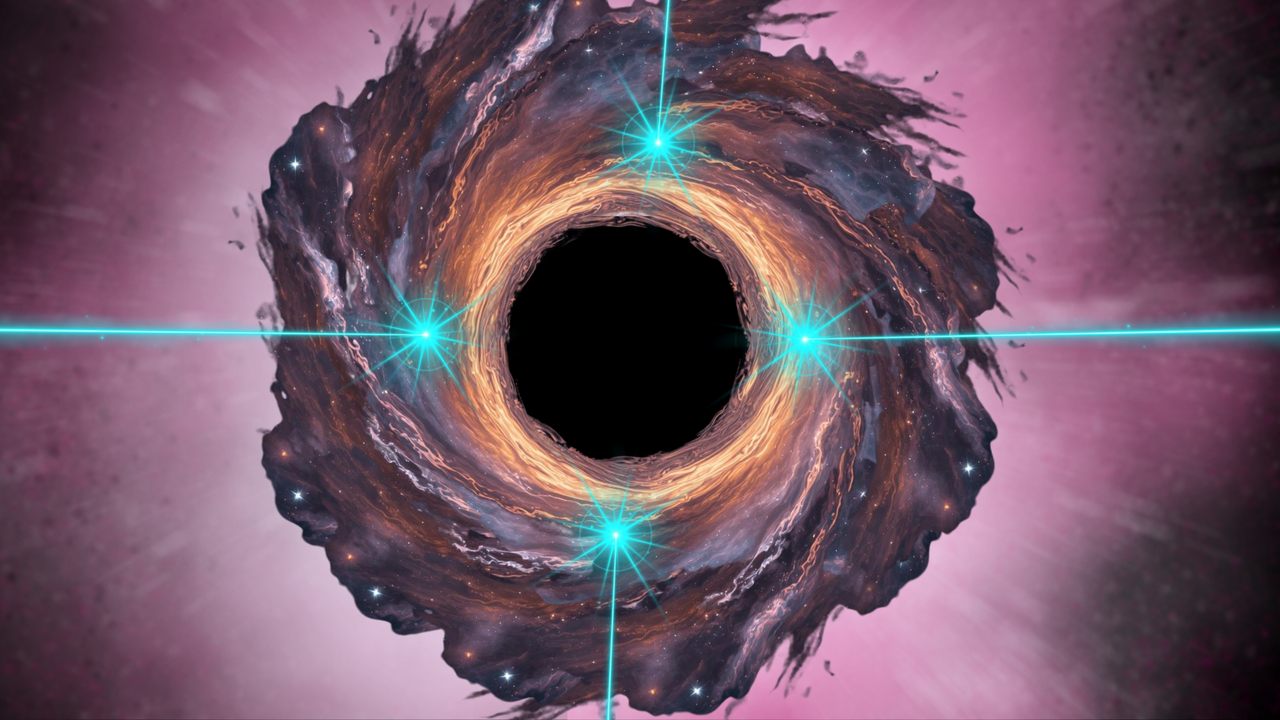
The James Webb Space Telescope has identified mysterious celestial objects known as 'little red dots' in the early universe. These enigmatic galaxies are thought to potentially conceal supermassive black holes. Scientists hypothesize that these buried black holes could be powerful sources of high-energy neutrinos. These neutrinos, often referred to as 'cosmic ghosts,' are subatomic particles that travel at nearly the speed of light and interact very weakly with matter. If confirmed, this discovery would provide a new understanding of how black holes in the early universe influence their surroundings. It could also shed light on the mechanisms by which these energetic particles are produced and propagated across vast cosmic distances. The observation of such phenomena in the nascent stages of the universe is crucial for comprehending cosmic evolution.
The discovery of 'little red dots' by the James Webb Space Telescope presents an opportunity to investigate the formative stages of galactic and black hole evolution. The potential detection of high-energy neutrinos emanating from these early galaxies could refine astrophysical models concerning black hole accretion and jet formation in the universe's infancy. Understanding the energy output and particle emission from these nascent systems is critical for mapping the cosmic web and the distribution of matter and energy. This research may also illuminate the role of early supermassive black holes in galaxy formation and the reionization of the universe, offering insights into the interplay between gravitational and energetic processes that shaped the cosmos.
AI-generated to prompt reflection — not editorial opinion, not advice, not a statement of fact. How this works.