Webb Telescope Studies Nearby Galaxy to Uncover Early Universe Dust Secrets
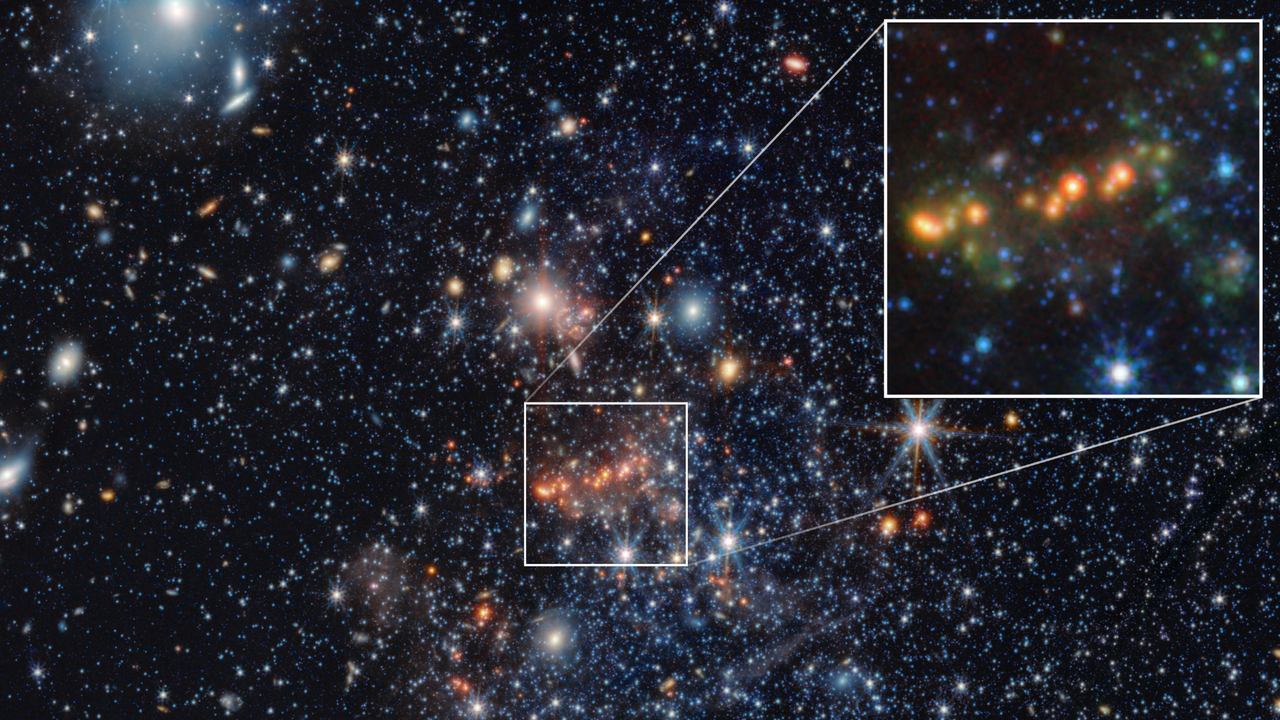
Astronomers have utilized the James Webb Space Telescope to investigate the origins of cosmic dust, a crucial component for star formation. While the telescope's primary mission often focuses on the most distant and ancient galaxies, this study examined a much closer, more modern galaxy. This approach allows scientists to gain insights into the processes that occurred in the early universe. The research aims to understand how these early "cosmic factories" enriched the infant cosmos with dust. This dust is fundamental for the formation of stars and planets. By observing a contemporary galaxy, researchers can better interpret the signals from the universe's earliest epochs. The findings are expected to shed light on the conditions that prevailed billions of years ago. Understanding dust formation is key to comprehending the evolution of galaxies and the universe as a whole. The James Webb Space Telescope's advanced capabilities are instrumental in this endeavor.
This research leverages the James Webb Space Telescope's observational power to bridge the gap between early and modern cosmic phenomena. By studying a nearby galaxy, scientists can infer processes from the distant past, offering a more tangible model for understanding the universe's formative stages. This methodology highlights the interconnectedness of galactic evolution across cosmic time. The analysis of dust production in contemporary systems provides a crucial analog for interpreting faint signals from the early universe, enabling a deeper comprehension of the conditions necessary for star and planet formation. This approach offers a robust framework for understanding cosmic evolution without needing direct observation of every ancient event.
AI-generated to prompt reflection — not editorial opinion, not advice, not a statement of fact. How this works.