West Bengal's political shifts could significantly shape Bangladesh-India relations
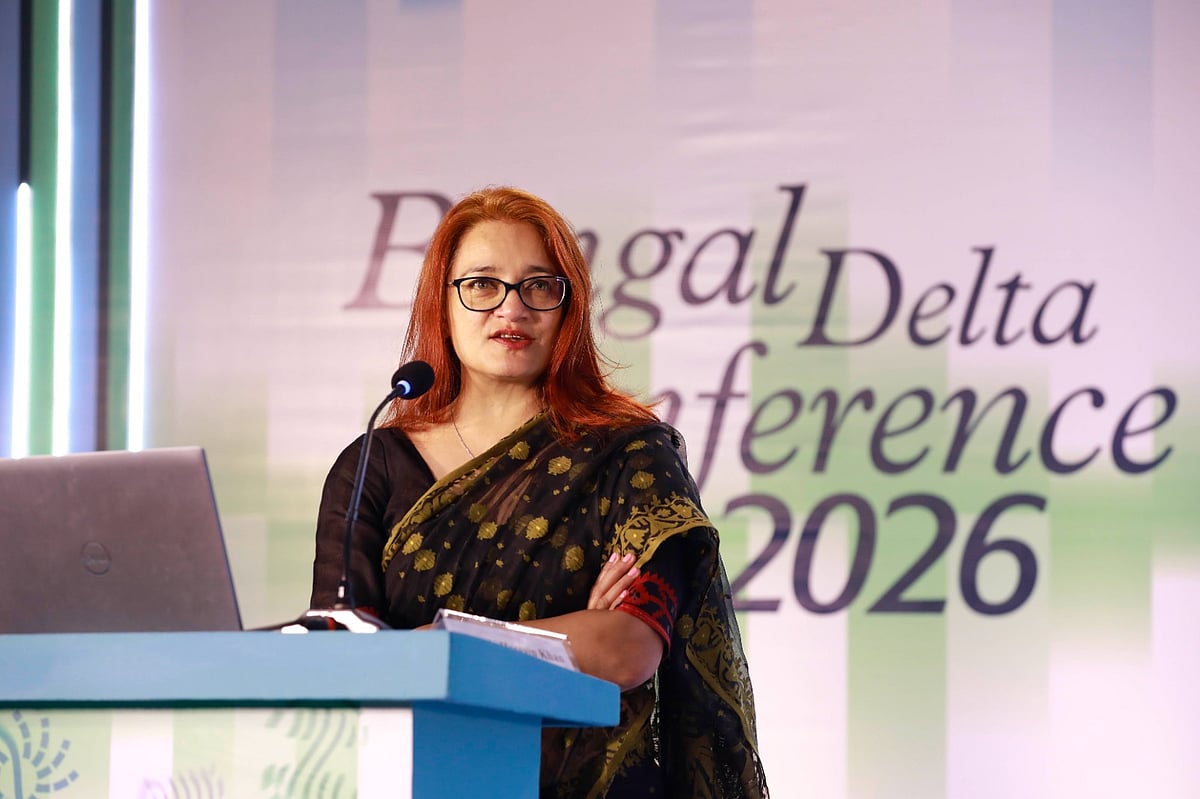
The political and social evolution of West Bengal may become a major determinant of the future relationship between Bangladesh and India, according to Professor Pallabi Roy of SOAS University of London. Speaking at the 'Bengal Delta Conference 2026' organized by the Dhaka Institute of Research and Analytics (DIRE), Roy argued that Kolkata's politics will play a crucial role alongside decisions made by New Delhi and Dhaka in charting the course of bilateral ties. Roy, a professor of political economy at SOAS's Centre for International Studies and Diplomacy, presented her views in a lecture titled 'When Borders Cannot Separate Politics: West Bengal's Political Transition, Why It Happened, and Its Impact on Bangladesh'.
Roy emphasized that West Bengal has historically served as an informal bridge or 'buffer' for political, cultural, and diplomatic communication between Bangladesh and India. Even when the central and state governments held different political stances, West Bengal often facilitated dialogue and helped de-escalate tensions. However, a weakening of this buffer could introduce new challenges in areas like the Teesta River water-sharing agreement, border management, and other aspects of bilateral relations, potentially making the border more sensitive. She also noted that the political landscape in Bangladesh has changed since 2024, raising questions about the political acceptability of India's development assistance and infrastructure projects if pursued by the current government, given lingering public sentiment regarding the Awami League government's close ties with India.
Addressing the Teesta water-sharing issue, Roy pointed out that it cannot be solely explained by West Bengal's politics, as the river's flow is significantly controlled by hydroelectric projects in Sikkim. Therefore, changes in West Bengal's government alone cannot resolve this problem; the roles of the central Indian government and Sikkim are also critical. Roy concluded by highlighting the politics of identity as a key future challenge, questioning how the 'Bengali' identity can be made politically and socially acceptable beyond religious divisions. She suggested that establishing 'Bengali' identity and national identity as coexisting rather than competing identities could be beneficial for the future relations between the two countries, with West Bengal's context relating to state identity and Bangladesh's to national identity.
The analysis suggests that regional political dynamics within India, specifically in West Bengal, have a significant, often underestimated, impact on its foreign relations, particularly with neighboring Bangladesh. This highlights a potential systemic vulnerability where domestic political shifts can create external policy challenges, especially concerning resource sharing and border management. The lecture implicitly critiques a centralized foreign policy approach by India, suggesting that effective bilateral relations require a nuanced understanding and management of sub-national political actors and identities. Looking ahead, the increasing salience of identity politics in both regions, as noted by Professor Roy, could either foster greater cooperation through shared cultural heritage or exacerbate tensions if framed as competing nationalisms. Navigating this requires diplomatic strategies that acknowledge and integrate these complex identity narratives, moving beyond purely state-centric or transactional foreign policy.
AI-generated to prompt reflection — not editorial opinion, not advice, not a statement of fact. How this works.