West Bengal uses 'Goonda Act' against protestors accused of attacking journalists
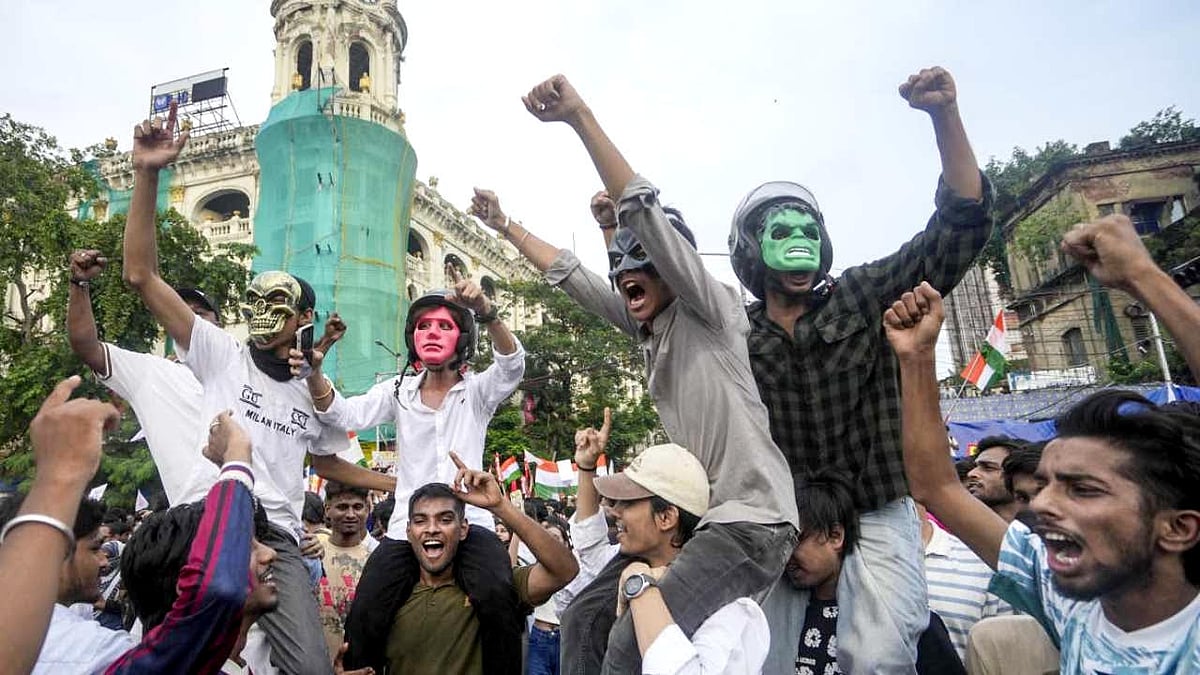
West Bengal Chief Minister Suvendu Adhikari announced on Saturday that the state will invoke the controversial 'Goonda Act' against individuals involved in an attack on journalists during a protest in Kolkata. The protest, held on Friday, was against the alleged leak of medical admission test papers. Adhikari stated that five individuals have been identified and will face severe punishment under the Goonda Act, intended to serve as a deterrent for generations. This marks the first application of the contentious legislation. He further revealed that 70 individuals were identified from Friday's rally in Dharmatala, with seven cases registered, and the Goonda Act provisions have been added to these cases. The protest was organized by several left-wing student groups and the Korok Janata Party (KJP) demanding the resignation of the Education Minister. Allegations suggest that during the rally at Dorina Crossing, a group of protestors attempted to attack the police and threw shoes and bottles at journalists. Six journalists were reportedly injured and received medical treatment. Adhikari clarified that the identified individuals are not students or KJP members, nor are they associated with the 'NEET' protest movement. He described them as criminals from Rajabazar, Khidderpore, Iqbalpore, and Watgunge, naming Afroz, Nahid, Tanvir, Nizam, and Rahul Jamal among them. He condemned the act of throwing bottles and shoes at journalists as uncharacteristic of West Bengal's culture. Five of the seven cases filed were by various media outlets, and one was filed by the police.
The invocation of the 'Goonda Act' in West Bengal, ostensibly to address violence against journalists during a protest, introduces a potent legal instrument that could significantly impact civil liberties. While the state's objective of ensuring safety for media personnel is a legitimate concern, the broad application of such a stringent law raises questions about proportionality and potential for misuse. Future implications may involve a chilling effect on public assembly and dissent, as individuals may fear severe repercussions for participating in protests, even if their actions do not involve direct violence. The government's stated intention to deter future misconduct through severe punishment for a few highlights a strategy focused on punitive measures, which may overshadow efforts towards de-escalation and restorative justice. This approach warrants careful monitoring to ensure it aligns with democratic principles of free expression and assembly, particularly in the context of growing societal reliance on digital platforms for organizing and disseminating information.
AI-generated to prompt reflection — not editorial opinion, not advice, not a statement of fact. How this works.